

WIVELISCOMBE’S commemoration of the Great War has continued following the successful 2016 Heritage Lottery funded Wiveliscombe Children of the Great War project and the installation of the Memorial Mosaic in the Jubilee Gardens.
The impact on those who swapped the country town and surrounding farms and rolling hills for the quagmire of the trenches on the Western Front in France, or on board ship heading for Gallipoli or even India must have been huge.
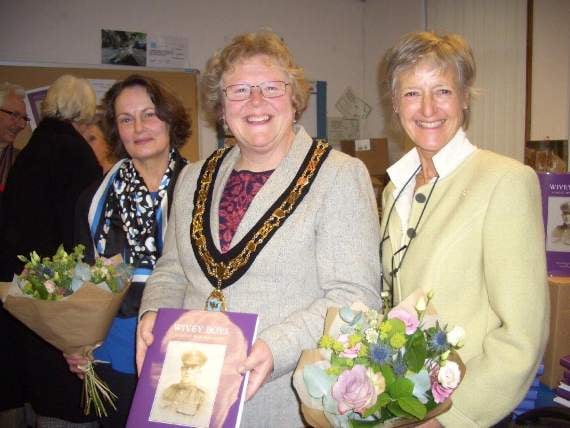
Sue Farrington MBE, helped by Glenda Anderson, has been researching the stories of these men and women for several years, and Saturday saw the launch of ‘Wivey Boys: A Great War Register of Wiveliscombe men and women who served between 1914-19’.
The event went well with people from far and wide attending, including many older residents of Wiveliscombe who had contributed their memories and photographs of the book.


The names of the 55 who made the ultimate sacrifice are recorded on war memorials within the parish church and another 238 are listed on a wooden panel in the back of the church, the men and women who joined the Colours during the first year of the
conflict.
‘Wivey Boys: A Great War Register’ seeks to identify these parishioners but also lists
over 200 more, hitherto unrecorded, who served during the following three years of hostilities.
In addition to brief biographies of more than 400 people, there are also sections on the town’s war memorials and those of the Ten Parishes, a time-line and comprehensive glossary, appendices and more than 300 illustrations, together with details of many other aspects of the Great War.
The book includes fascinating information including about one officer who left Ypres at 5am one morning and was home in Wiveliscombe by 5pm the same day, and about ten young men held as prisoners-of-war.
The women of the town kept things together at home and contributed with their work in the local Voluntary Aid Detachment.
The Army Service Corps and the Mule Remount Depot were based in the farms surrounding the town during the early years of the war. A particularly interesting chapter fills in some of the gaps about this latter poorly documented subject.
This unusual and meticulously researched publication is a worthy commemoration of all those involved. It makes unexpectedly interesting reading and is a fitting tribute to the ‘Unknown Soldier’ pictured on the front cover.
‘Wivey Boys: A Great War Register’ is now on sale priced £15 until Christmas then after that £20. It is available from The Community Office in Wiveliscombe and the Post Office.
Comments
This article has no comments yet. Be the first to leave a comment.