
A RESEARCH study led by Somerset NHS Foundation Trust has shown strong support for offering cervical screening earlier in the postnatal period.
It’s a finding that could improve uptake, convenience and early detection for thousands of women after giving birth.
The PINCS‑1 study explored whether cervical screening could safely and acceptably be carried out at the routine six‑week postnatal check, rather than the traditional 12‑week appointment.
The study also tested whether urine samples could be used as an alternative method for screening.
 NHS staff go the extra mile to keep patients safe during heatwave
 Somerset Council steps up support and advice to keep people safe as temperatures soar
 Met Office raises heatwave warning to highest level and warns 'risk of death'
 Bin collections from 6 am as health advice issued ahead of extreme heat warning
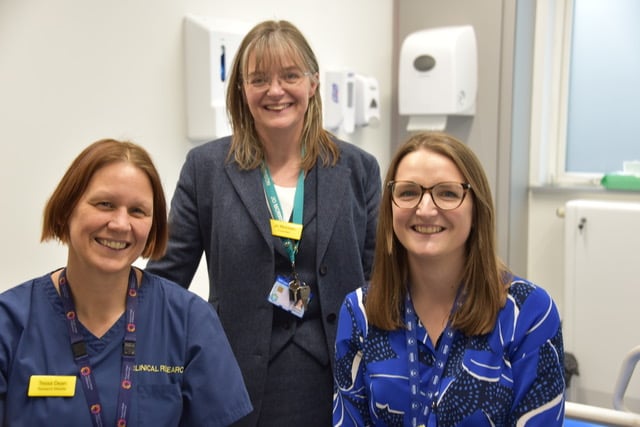
Dr Victoria Cullimore, a clinical research fellow at Somerset NHS Foundation Trust, has been closely involved in running the study.
She said the early findings are “encouraging, practical and full of potential for real‑world change”.
“We know that attending appointments shortly after having a baby can be extremely difficult,” she explained.
“If we can align cervical screening with the six‑to‑eight‑week check, an appointment people are already planning to attend, we remove a significant barrier.”
Women were invited to take part from three hospitals across the South West, with almost half of those invited agreeing to join the study.
Everyone who took part had both the usual cervical screening test and a urine test at six and 12 weeks after giving birth, and completed a short questionnaire about their experience.
Victoria said the high level of interest and participation reflects a wider appetite for more accessible screening.
“People want to attend screening, but the challenge is fitting it into busy, demanding lives,” she said.
“What we’re hearing is that timing really matters, and six weeks feels more convenient and more achievable for many new parents.”
The study found that, overall, participants did not experience more discomfort at six weeks compared with 12, and 95 percent said they would be happy for their future cervical screening to be carried out at six weeks after birth.
“That level of acceptability is incredibly important,” Victoria added. “It suggests that changing the timing could improve uptake without compromising comfort or safety.
“The clinical results were also reassuring as we saw excellent agreement between the six‑week and 12‑week HPV test results.
“In 95 percent of cases, the results were identical, which gives us confidence that earlier screening is reliable.”
Although urine testing did not detect as many HPV cases as the usual clinician‑taken sample, it did identify one participant who had abnormal cells on their cervical screening.
Victoria said this highlights an important avenue for future research. She added: “Urine testing is simple, private and non‑invasive, and even though it’s not perfect yet, it absolutely has potential, especially for people who avoid screening because of discomfort or anxiety.”
The team recently started the next study phase (PINCS-2) where participants will receive cervical screening at either six or 12 weeks using three different approaches: the usual cervical swab, a urine test and a vaginal self‑swab.
For more information or to get involved in upcoming groups, contact the study’s research team at [email protected].
Comments
We've recently changed our login process. If you have an account for commenting, you will need to re-register on the login window.
This article has no comments yet. Be the first to leave a comment.