

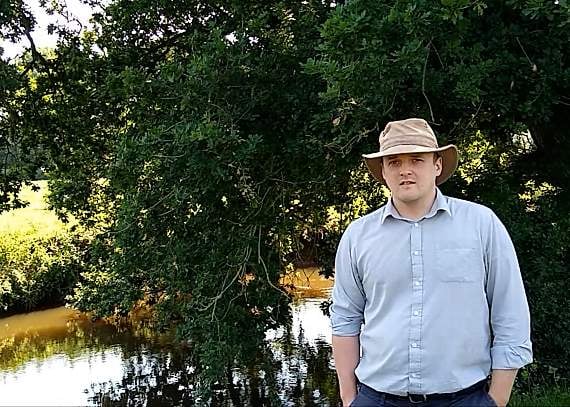
PEOPLE living or working near the River Culm can help it be more resilient to climate change in a new environmental project.
Connecting the Culm is an initiative led by Blackdown Hills Area of Outstanding Natural Beauty (AONB) and supported by Westcountry Rivers Trust that aims to involve communities in the creation of a 25-year blueprint for the river’s catchment.
Project manager Steven Johnson, from Blackdown Hills AONB, said: “We aim to bring people together to make a long-lasting plan to improve water quality, support biodiversity and habitat, and make the river and its floodplain more resilient to flood and drought.
“Within the 100 square miles that drain into the Culm, the watercourses face several problems.



“For example, properties and transport infrastructure are at risk of flooding, and the river is failing to meet water quality targets due to pollution.
“We want people to come on a journey to rediscover their river and help create a blueprint for its future, using nature-based solutions such as soil restoration and habitat improvements that will help solve problems now and in the future, and which will benefit people living nearby.”
The blueprint for the River Culm will be the masterplan for the whole catchment for the next 25 years and the project has launched an interactive map survey in which people can share their views as the first step towards this.
Nick Paling, head of evidence and engagement at Westcountry Rivers Trust, said: “We want to ensure people can get involved easily.
“Our interactive map allows people to let us know what they think will help make the river more robust in the face of climate change pressures.
“By taking part in Connecting the Culm, they will directly influence the long-term health of the river and the future of its surroundings.”
All those who complete the survey by the end of August 2020 can be entered in a prize draw to win two tickets to Coldharbour Mill in Uffculme.
Demonstration sites will also be created within the catchment to test a range of nature-based interventions, shaped by local landscape and history, its communities and their aspirations.
These interventions could vary from restoring and monitoring soil with farmers, flood alleviation features on land associated with large new developments to supporting community land trusts with tree planting or flood alleviation features on a small scale.
Several online events will be taking place over the coming weeks and months, with events in the communities being organised as and when Covid-19 guidance allows. See
connectingtheculm.com/ctc-events/ for the latest information.
Steven added: “The more people take part in the survey and the project, the more we can ensure it delivers the results they want to see.
“This is an exciting opportunity to learn more about the river and have your say about its future.”
The scheme is funded via the EU Interreg 2 Seas Co-Adapt programme and partners Devon County Council, the Environment Agency, Mid Devon District Council, and the National Trust.
Comments
This article has no comments yet. Be the first to leave a comment.