
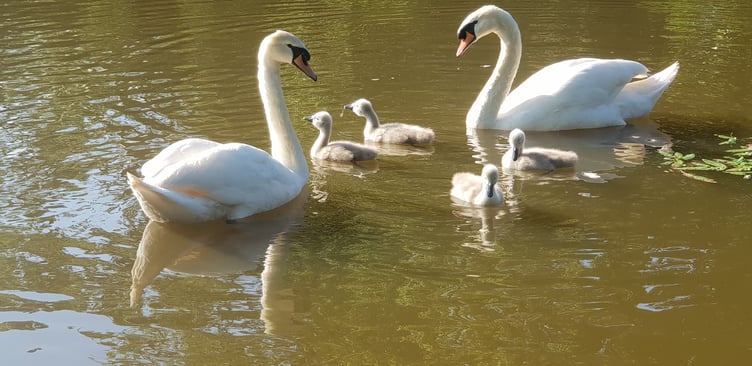
ANGLERS in Wellington have been warned to take care when discarding tackle after an old fishing hook became lodged in the mouth of one of a pair of swans resident in the town’s Basins nature reserve.
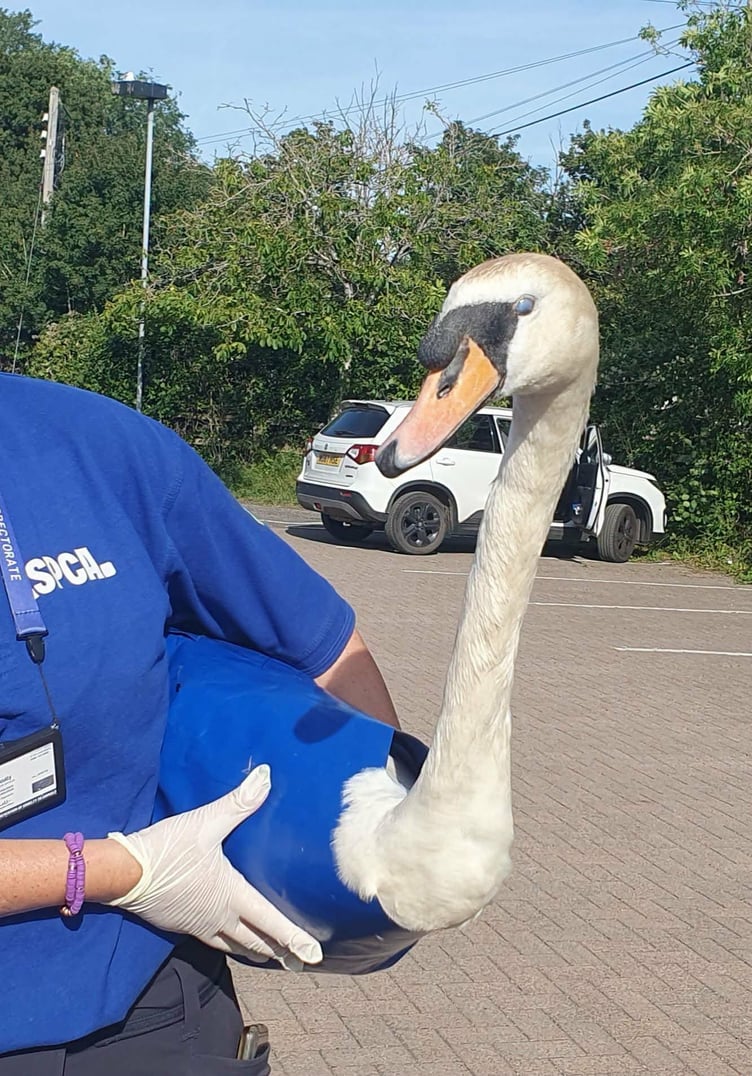
The female swan, which currently has four cygnets, was rescued by RSPCA officers on Thursday (July 2) and taken to the charity’s West Hatch wildlife centre, near Taunton.
There, a veterinary surgeon safely removed the hook and checked to make sure she was healthy before the bird was returned to the Basins the same evening.
However, an RSPCA spokesperson said the charity’s officers saw too many animals with ‘terrible injuries’ caused by discarded fishing line, hooks, and plastic netting.
There were 751 incidents last year, accounting for about 34 per cent of all litter-related calls received by the charity.
The spokesperson said the majority of anglers were careful when fishing, but a small number let the community down by not disposing of their waste properly and leaving animals in danger.
They said: “Old fishing lines can cut deeply into the flesh of water birds like swans, geese, and ducks, affecting circulation and causing wounds to become seriously infected.
“Sometimes, we see birds that have swallowed barbed fishing hooks, like this swan, so these hazards can very quickly become a matter of life or death.
 Council switching Tonedale Mill protection money to second Wellington heritage site
 Loss from Somerset Council property sale 'could have paid for 65,000 pothole repairs'
 Non-shows at critical Wellington pharmacies debate means three-month delay
 Climate Cafe Wellington urges for creation of climate pressure group after heatwave
“Discarded line in particular is a terrible hazard for wildlife as it can be almost invisible.
“We strongly urge those who enjoy fishing to make sure they leave nothing behind.
“It only takes one piece of snagged line to be left in a tree or dropped near the water to endanger an animal’s life.”
The spokesperson said anglers were encouraged to follow the Angling Trust Anglers Against Litter campaign and make use of recycling schemes to dispose of their waste tackle.
Comments
We've recently changed our login process. If you have an account for commenting, you will need to re-register on the login window.
This article has no comments yet. Be the first to leave a comment.