

Transition Town Wellington community gardeners have been back out, maintaining and improving some of our public green spaces, for over a month now since lockdown eased.
We need to do it in a ‘Covid-safe’ way now, so groups have got smaller, but we have been clearing brambles, scything grass and nettles, planting wildflowers and building bug habitats out of wood.
We have even started a new WhatsApp group, so we can go out as individuals and help, outside the usual organised sessions.
The bog wildflower meadow is expanding in the sustainable drainage dip down at Longacre, with the recent rain showing how it stays wet there from the surface run off from the Dobree Park estate. Volunteers across Wellington have been growing on bog plants from seed collected from The Pop-Up shop in January, and we went down in pairs over a couple of weeks to plant them.
 Emergency services declare Somerset major incident after Storm Chandra floods
 Nynehead residents send joint letter to MP and council protesting at floods inaction
 Bagpipes, tartan, and haggis as Nynehead Court residents enjoy a Burns lunch
 Man found dead on shoreline thought to be missing Christmas Day swimmer Matthew Upham
We have also been improving Post Close by planting plug plants which prefer a dry site, and planning to cut the long grass in all our managed spaces in September, to sow more wildflower seed and plant more plug plants.
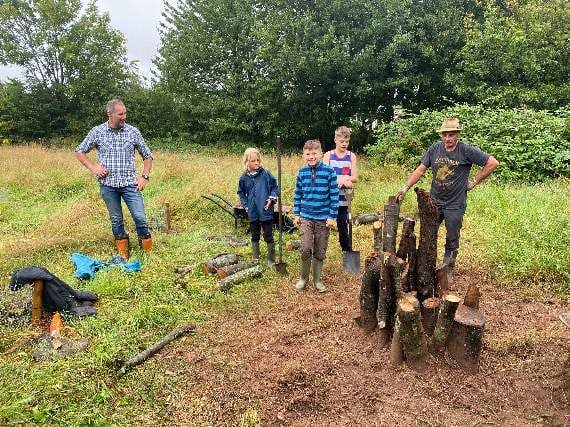
Three parents and their sons created two distinctive beetle habitats at Longacre. A stag beetle log pyramid attracts many different types of beetle, as described on TTW’s Facebook page. This is an attractive feature which would look at home in a flower boarder in the garden. See https://ptes.org/wp-content/uploads/2020/05/Build-a-log-pyramid-for-stag-beetles.pdf on how to build one.
We also made a pile of logs with a thatched roof. The nooks and crannies will be home to small mammals and amphibians, with the rotting wood providing food for various beetles and mini-beasts.
It is important to keep making more of these habitats and creating wildlife-friendly gardens, to help nature out, from the bottom of the food chain up.
Look out for the launch of our new wildlife map, which we are working hard on, and will provide lots of ideas for inviting nature closer to home.
If you would like to get involved with community gardening, or anything else TTW does, contact [email protected] or visit the website ttw.org.uk
HELEN GILLINGHAM
Comments
This article has no comments yet. Be the first to leave a comment.