

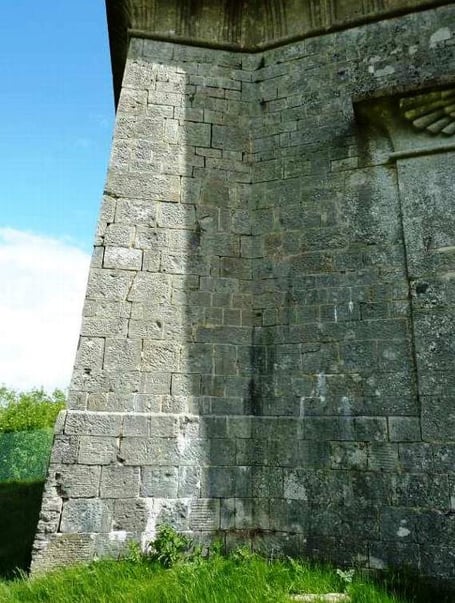
PLANS for the urgent £3.8 million refurbishment and renovation of the historic Wellington Monument have been unveiled.
The National Trust has been tackling the conservation of the monument since it first owned the landmark in 1934 and now officials are beginning to worry about stonework possibly falling with the upper half of the obelisk in very poor condition.
The charity has applied to Somerset West and Taunton Council for planning permission to go ahead with proposals to bring the monument back up to scratch.
The 175ft three-sided obelisk on the Blackdown Hills was completed in the 1820s having been first proposed a few years earlier following the Duke of Wellington’s 1815 victory at the Battle of Waterloo.



But the National Trust has said that previous repair work on the ageing monument has not proved the best way forward.
“Repairs carried out in the recent past are now failing and contributing to the ongoing decay of the monument,” said a National Trust spokesman.
“Past repairs have sometimes been inappropriate and incompatible for historic masonry. The inherent problems still exist despite previous interventions.
“Restricted funds placed on the past repair campaigns have also been problematic. Repairs are now urgent.”
Now a list of urgent work is being lined up for the monument to give it a full restoration.
The work includes:
Structural strengthening of the monument as a whole.
Structural repair of the monument and its base.
Replacement of smaller stones with larger scale masonry blocks.
Grouting and re-pointing to prevent water ingress and further decay.
Structural repairs to the staircase to make it safer.
Proposals submitted to the council also include the installation of security windows and a stair handrail to improve safety at the monument.
The monument is the largest stone pillar in the UK, the second largest in Europe and the fifth largest in the world, while it is also the largest triangular obelisk in the world.
“In 1934 the monument and 12.5 acres were transferred to the guardianship of the National Trust without any endowment,” said a heritage statement report submitted to the council.
“Campaigns of major repairs have been carried out by the trust during the 20th Century but the trust’s growing concern over the condition of the monument resulted in its closure to the public and the erection of safety fencing around the monument.
“Since 2015 the trust has commissioned in-depth scientific research to understand the problems facing the historic fabric.
“It was subsequently entered into Historic England’s Heritage at Risk Register in 2016.”
Other options for the monument have already been discarded by the National Trust including mothballing the landmark and letting it fall further into disrepair; demolishing the monument ‘stone by stone’ would cost around £1m; putting a protective skin around the monument would cost £2.2m; while dismantling the monument and rebuilding it with new masonry would cost nearly £5m.
The proposed restoration of the monument has been backed by Wellington Town Council which last September agreed to give £10,000 to the overall £3.8 million project.
It is hoped a decision on the planning application will be made by the middle of August this year.
Comments
This article has no comments yet. Be the first to leave a comment.