
BACK in 2010, Transition Town Taunton were doing some great work with the local councils. Two of their members, led a number of workshops to help councillors and members of the public imagine what a low carbon world might look like and consider the impacts of climate change on the local area.
There was a meeting held in Wellington and over the last few months we have been comparing our hopes at that meeting with the reality fifteen years down the line. This month we are focussing on food. The link to the original report can be found on our website ttw.org.uk/resources/reports
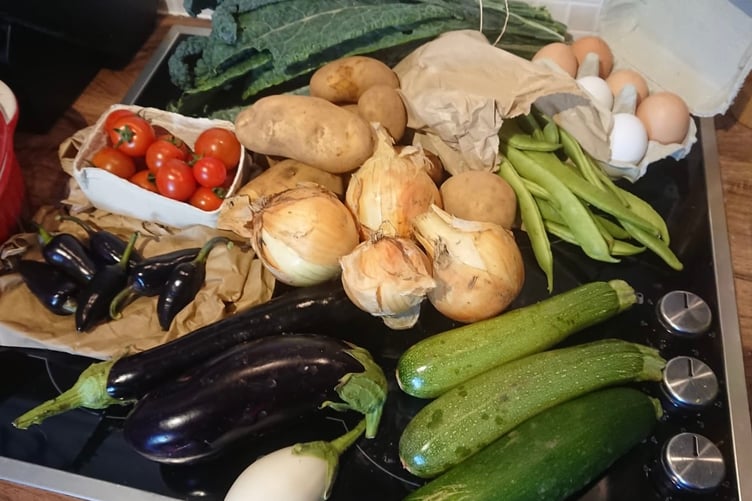
In some ways much of what was predicted for the local area has in one way or another come about; although not to the degree that had been hoped for. Nationally the UK is about 60 per cent self-sufficient in food and over 70 per cent in items that we can grow here such as potatoes. This is considerably better than in the 1930s but still means we are reliant on 30 per cent of our food coming from abroad and all the potential problems that could entail. The idea put forward of local councils being responsible for carrying out an audit of local food production so that “gaps could be plugged, ensuring a balanced year-round diet for local people” sounds like a very good idea and could help prevent possible food shortages due to disrupted supply lines or climate change and water shortages.
The 2010 report aspired to have a local community farm, which we now have in the centre of the Green Corridor, which provides vegetables for a number of months a year for local people. This is a wonderful development and is the outcome of a lot of hard work by volunteers and provision of the land by the council.

.jpeg?width=209&height=140&crop=209:145,smart&quality=75)

Since COVID-19 there has been an increase in demand for allotments nationally and a huge increase in interest in gardening and growing food (the waiting list for allotments has climbed from 95,000 in 2010 to 175,000 in 2023). There is an intention to increase the allotment site in Wellington as part of the Green Corridor development which is a very positive development. Other local allotment sites are in theory being provided by developers as part of their planning applications for housing development. Since 2010 we have seen a massive increase in available information on food driven by the rise in digital media, not something that was predicted in our meeting fifteen years ago.
One of the main achievements of Transition Town Wellington over the last fifteen years has been to develop a variety of community gardening sites in and around Wellington; involving the public in the planning, development and maintenance. Many of these have included fruit trees and fruit bushes as well as edible perennial plants for people to pick for free. We have recently been recognised for this work by the RHS with the National Award for Sustainable Gardening.
By Transition Town Wellington
Comments
This article has no comments yet. Be the first to leave a comment.