
Methodists bring good causes together
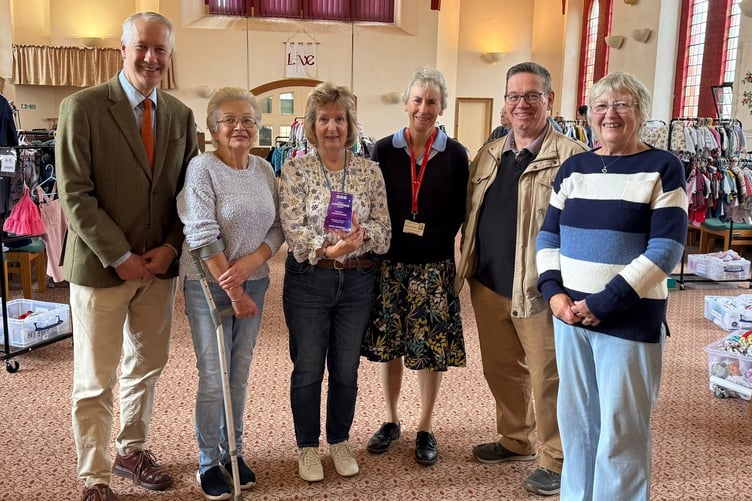
SATURDAY, October 10 saw the regular Coffee Morning at Wellington Methodist Church transform into a lively community celebration, with groups that share the church building coming together to showcase their work, build new connections and support one another.
Taking part were St John Ambulance cadets, Waterloo Road Pre-School, Wellington Street Pastors as well as the Makaton Choir, who entertained guests with a selection of well-known songs. Among our visitors were MP Gideon Amos and Cllr Andrew Govier, who took time to learn more about what happens at Wellington Methodist Church.
Families were particularly drawn to the 0 - 5 Clothes Swap. Held from 11.30 am to 1 pm on the second and fourth Tuesday of each month, it welcomes donations of clean, good-quality clothing for children aged 0 to 5, so that families can find baby and toddler clothes that fit. This simple idea of sharing and mutual support recently gained wider recognition when the Clothes Swap was Highly Commended in the BBC Radio Somerset Make a Difference Award.
Other church groups represented included the Parent and Toddler Group, together with the ongoing collection of good-quality clothes, bedding, shoes and health products for the charity cr2ee, which helps many vulnerable families in Ukraine and Moldova. Taken together, these groups and activities showed an inspiring community working to meet a wide variety of needs.
Policing for the deaf
POLICE are highlighting the range of ways deaf, hard of hearing, and deaf-blind people can contact the force in an emergency or a non-emergency situation.
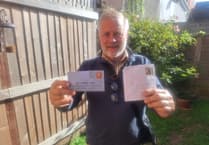
Anybody experiencing an emergency who uses British Sign Language (BSL) can call 999 by using the 999 BSL video relay service, or download the 999 BSL App on their smart device from www.999bsl.co.uk.
By registering in advance at www.avonandsomerset.police.uk/contact/british-sign-language-bsl/emergency-sms-service-for-deaf-deafened-hard-of-hearing-and-speech-impaired-people they can contact 999 through text message.
If they use Text Relay they should dial 18000 to be put through to the police.
For non-emergencie, people who use BSL can place a 101 call through the Convo service (previously known as SignLive).
This service connects callers to a qualified online BSL interpreter who will relay the conversation between the caller and the police.
If they use Text Relay, they should dial 18000 101 and they will be put through to the police.
Police officers and staff also have access to Convo's interpreter support.
Avon and Somerset Police has a number of staff trained in BSL to improve engagement with deaf communities.
The Police Link Officers for Deaf (PLOD) have achieved BSL qualifications (up to level two) alongside deaf awareness training.
The constabulary’s lead officer Det Supt Mike Buck said: “Everybody should be able to contact the police in a way that is accessible to them.
“Through services such as 999 BSL, Convo, and Text Relay, as well as our network of trained Police Link Officers for Deaf, we are working to ensure deaf, hard of hearing, and deaf-blind people can access our services and receive support when they need it most.”
Sending Christmas love to Ukraine
THANKS to the generosity of the people of Hemyock, Wellington and surrounding area, 61 Christmas gift boxes will soon be on their way to Ukraine via Christian Response to Eastern Europe (Cr2ee Shoeboxes).
Further boxes are already being filled to go through the Devon charity to Moldova in November so it is not too late to make a donation if you wish. Suggested items include hat, scarf, gloves, toiletries, confectionary, small toys, make up, crayons, pencils, colouring pads, shaving foam, socks and small tools. Due to Custom regulations all items MUST be new.
Please contact 07773579809 before November 16 if you would like any further details or can offer a donation.
u3a discover the world of glass
MONDAY, October 12 saw the u3a hold its monthly meeting in the Rugby Club. We welcomed a large audience with one new member and several visitors joining us for the presentation of ‘The Wonderful World of Glass’ by Francis Burroughs.
He began by introducing glass as an element which occurred naturally in nature some 7000 years ago, as obsidian which is so beautiful it was used ornamentally as beads to be worn and bartered. His example of a necklace had a white flaw in the black, and was used by the artist who made it to enhance the piece - all this 100 years BC. From there we moved to the making of glass as we know it some 3000/3500 years ago in the Middle East and Syria, in particular.
Mr Burroughs’s brought along a huge quantity of items to illustrate his talk: a picture of an early vase of blue/white/yellow blown in the 14th century, a broken Roman bottle, also a small, intact bottle from the 1st century which looked like a sample bottle from today’s perfume makers. He went on to explain how glass required exceptionally hot temperatures to make it flow and artisans needed time and some not inconsiderable skills to achieve the many examples that are all around us on a daily basis from the bus window you look out of to ornate light fittings. You cannot talk about glass without mentioning Venice and the island of Murano, known for centuries as an epicentre and innovator of the coloured glass.
In 1685 Ravencroft glass appeared making very fine glass of which some 30 or so unique pieces still survive in museums around the world today. The 18th century brought us blue glass, as cobalt was added to the mix and made world famous by the Bristol Blue manufacture. There was glass of Roman origin, some repairs needed, there were very beautiful examples as in an Irish Hobnail goblet and a gorgeous tantalus of three Bristol Blue decanters with silver collars. And finally, the piece that most fascinated me was a standard flask - if anything of this age can be called ‘standard’ - that at some time in its life had the misfortune to have its neck broken. Someone deemed it so precious that it was ground down to level and a silver collar applied.
The reception to this presentation was very vocal with lots of stories, questions and applause. The hall was buzzing. A group of items, including the tantalus, beads of obsidium and various bottles from different centuries passed through the hall as the talk progressed were collected at the rear of the hall and kept members enthralled right up until they were collected by Mr Burroughs on his way home.
The meeting was completed by midday but it took a while with folk reluctant to end the very enjoyable morning.
Eligible groups encouraged to get their flu vaccination.
THIS year’s drive to protect the most vulnerable people against the winter flu virus has begun. All people aged 65 and over are among those who can receive a flu vaccination for free on the NHS. Those eligible can get their flu vaccination at their GP practice or a participating community pharmacy, helping to protect themselves and those around them this winter. Each year, thousands of people across the region will feel the unpleasant side effects of flu, but for those who are older or vulnerable, the risks posed by the virus can be much greater.
Dr Barry Coakley, deputy chief medical officer for Bath and North East Somerset, Swindon and Wiltshire, Dorset and Somerset Integrated Care Boards Cluster said: "Flu is not just a bad cold. It can be very serious, lead to severe illness and even be life-threatening. The flu vaccine is a safe and effective way for people to reduce their risk of becoming seriously unwell, and those eligible are strongly encouraged to take up the offer, not only to protect themselves, but also their loved ones.” Along with people aged 65 and over, others who are also being encouraged to get protected include under 65s who have been identified as clinically at-risk, care home residents, people who share a home with someone who has a weakened immune system, frontline health and care workers, pregnant women and children.
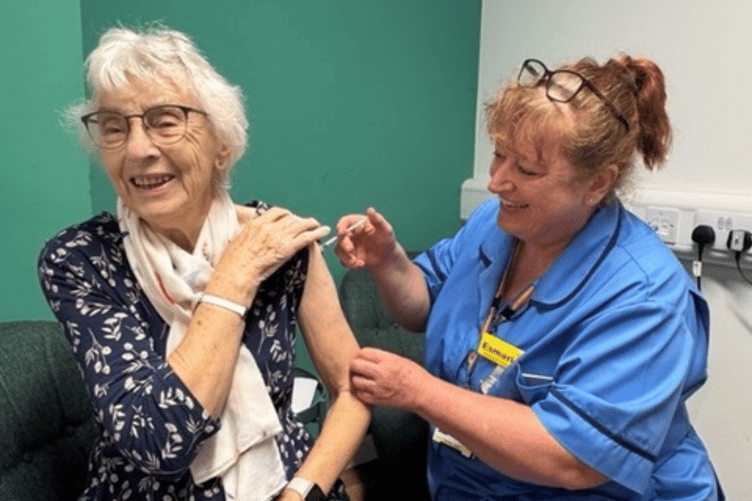
Dr Coakley continued: "A simple way we can care for older people and the wider community is to have the flu vaccination when it is offered. Having the vaccine not only gives a person’s immunity a much-needed boost but also makes them less infectious to others. Children are often good at sharing viruses, so when they take up the vaccine, it not only helps protect them, it also, importantly, helps to stop them from spreading flu to others at greater risk, such as their grandparents. I would encourage everyone eligible to book their vaccines as soon as possible and help to protect themselves and those around them.”
Flu vaccinations are available through local GP practices and community pharmacies. Anyone eligible for vaccinations can book online at www.nhs.uk, by downloading the NHS App, or by calling 119. COVID-19 vaccinations will also be available to people aged 75 years and over, residents in care homes for older adults and individuals aged 6 months and over who are immunosuppressed.
Comments
We've recently changed our login process. If you have an account for commenting, you will need to re-register on the login window.
This article has no comments yet. Be the first to leave a comment.