
Charting 11th century metalwork
The Friends of The Museum of Somerset (FOTMOS) were pleased to welcome by Zoom Rob Webley to their November meeting on Conquest and Continuity: 11th Century metalwork in a century of invasions. Peter is a postdoctoral research assistant in Archaeology at the University of Reading, where he is involved with the Medieval Ritual Landscape project. He is a small-finds specialist, whose particular interest is medieval metalwork. Previously Rob was a finds liaison officer for the British Museum’s Portable Antiquities Scheme (PAS), and subsequently worked on the Warhorse project at the University of Exeter. He also edits the journal of Somerset Archaeological and Natural History Society (SANHS).
The 11th Century was one of conquests - Danish, Norman and Viking. There is a ‘fault-line’ in academic heritage for this period, as known databases either start or end at 1066, and there is a perceived paucity of materials for this period. However, with the increase in numbers of detectorists and the introduction of the PAS (Portable Antiquities Scheme), many more items from this period are now being found. From his own PhD research Rob had found nearly 12,000 items including 4,500 dress accessories, 5,500 equestrian items and 1,500 items from the ‘elite’.
With particular regard to Somerset for this period, decorative copper alloy strips from high status wooden caskets and chests have been found at Castle Neroche and Chewton Mendip, as well as decorative shield mounts; all evidence of elite households. Stirrup mounts from the late Viking period have been found at Ilchester, as well as round copper alloy/silver brooches made from coins of this period. Interestingly, brooches found in urban areas tend to be silver, while those found in rural areas tend to be golden in appearance. Often the finds will reflect religious piety of the time.
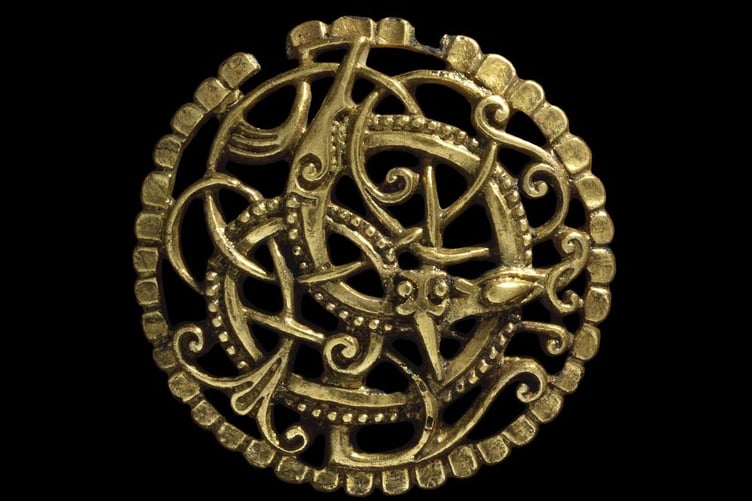
An outstanding example is the Pitney Brooch, found in Somerset in the late 19th Century. The only one found in Somerset, it is a domed Urnes-style brooch, the final major phase of Viking art dating from the 11th Century.
None of these items would have come to general knowledge had the PAS not been set up; big treasure hoards form only two percent of knowledge of the period, these other items show us the day-to-day activities.
Although the Museum will be closed for renovation from December to March, the FOTMOS talks will still be given by Zoom. The next on Tuesday, January 19 will be given by Tom Mayberry on Saxons to Supermarkets, at 7.30 pm. If you would like to join us, please email [email protected].
Lauraine Newcombe (FOTMOS)



Finalists and Forever Winners in Our Eyes

We are delighted to share that staff from Nynehead Court were nominated for the Great British Care Awards South West region, with three of our heads of department reaching the finals. Although we didn't take home an award on the night, being named a finalist is a tremendous achievement and recognition of the incredible work our team carries out every day.
The two representatives who attended the ceremony did us proud, and we would like to say a massive congratulations to all those involved. Your passion, dedication, and hard work do not go unnoticed.
At Nynehead Court, you're all winners in our eyes!
Claire Thwaites
Illuminated Christmas Carols return this December
Friends of Wellington Park will be holding their annual illuminated Christmas Carols this December. The Christmas Carol Concert is an annual event organised by the Friends of Wellington Park in a festively lit up park. It will take place at the bandstand in the park and will commence at 5 pm on December 6, lasting for about an hour. Blackdown Community Choir will lead the audience in familiar carols and also perform some Christmas songs for us. There will be complementary mulled wine and mince pies available and there will also be coffee tea etc to purchase from the Nomadic Barista van.
Trees and all their wisdom
Sampford Arundel Gardening Club welcomed Emma Duke to their November meeting for a talk entitled Trees and all Their Wisdom. Emma opened her talk by explaining a little about herself. She has been a full-time artist since 2009 and from her studio overlooking the Quantocks. She paints using a multitude of mediums from oils and watercolours and a whole host of others, painting mainly animals from hares, foxes and horses and also seascapes and she creates art from foraging along the Bristol Channel amongst other places for driftwood and anything else she finds of interest. She also forages in woodlands and ancient forests and loves being out in nature.
First of all, Emma held up a piece of driftwood which she had picked up from Lynmouth beach. As she held it up for us to see it was horizontal and looked like any other driftwood. However, then we were introduced to Colin the Cormorant. As she raised this vertically you could see the outline of the bird and all she had done was drill one hole so she could display it. Time and tide had fashioned it into Colin!
Next, we were asked to look at a diagram of a cross-section of a tree trunk that Emma had handed out before the talk. It showed a series of circles each one smaller than the other and Emma took time to say that it was not to scale. Each ring was named, so from the outside there was the Outer Bark, then the Phloem, Cambium, Xylem and Heart Wood. She explained what each of these sections of the tree do in detail, for example, the bark keeps the tree warm in winter and cool in summer and provides some protection from insects. A wound to the bark can take up to 20 years to heal and although the tree produces a chemical to seal the wound it doesn’t produce new bark.
Emma then handed out some of the wood that she had foraged from smooth bark to rough bark, all of which were extremely tactile - one even looked like a horse’s hoof. She explained how trees can communicate with each other through the Wood Wide Web. It seems that the trees roots can link to other trees both their own type and other different species of trees. Often Mycorrhizae fungi helps to connect the trees and they can send electrical pulses to each other. A mother tree can identify siblings and feed them first before the other trees.
Emma spoke about Oak trees and how they don’t have acorns every year. It is said that all the Oak trees within a radius of up to 100 miles can agree when to produce acorns and when not to. They normally produce acorns every two to five years and can sense when under threat from squirrels, boars etc. And finally, she said that it has been scientifically proved that by sitting for three hours or more in an ancient forest, your lung capacity increases significantly.
This was a highly informative but very fun presentation which had a number of astonishing facts and Emma made the whole complicated process of tree life easy to understand and interesting.
We next meet up on December 10 for our Christmas social evening in the Parish Room at 7.30 pm. If you would like any information about our Gardening Club please contact Sue or Nick Matthews on 01823 672662.
Father Christmas
FATHER Christmas will be arriving at a Somerset Farm Shop by a surprise mode of transport for a free arrival event before hosting his first 2026 grotto of the season. Santa will pull up outside Rumwell Farm Shop at 9.30 am on Sunday, December 6 to meet children waiting to greet him before taking up residence in his cosy cabin on site. The big man will spend time chatting with the waiting crowds and his friendly elves will be handing out complimentary sweets to children.
Partner at Rumwell Farm Shop & Café, Sophie Mitchell said: “We’re hoping lots of people turn out to meet and greet Father Christmas and help us launch our officially countdown to Christmas. We’re also inviting children to make ‘Welcome Santa’ banners or posters at home to bring along and wave as he arrives. Father Christmas’s arrival is completely free for anyone who’d like to come along and watch. Our award-winning Café will be open as usual serving breakfast and refreshments, and our Shop, complete with our new Christmas Shop, will also be open for anyone wishing to browse or buy something festive too.”
After his arrival, Father Christmas will be in his Cosy Cabin Grotto from 10am to 4pm. He’ll also be hosting grottos on Saturday, December 12 and Sunday, December 13. Sophie added: “With the help of his trusty band of elves, he’ll wish everyone a Merry Christmas and give each child a wrapped, age-appropriate gift to take home.” Grotto tickets cost £16 per child, including an age-appropriate gift, and can be purchased via the Rumwell Farm Shop website. Booking is essential and must be made online.
Comments
We've recently changed our login process. If you have an account for commenting, you will need to re-register on the login window.
This article has no comments yet. Be the first to leave a comment.