
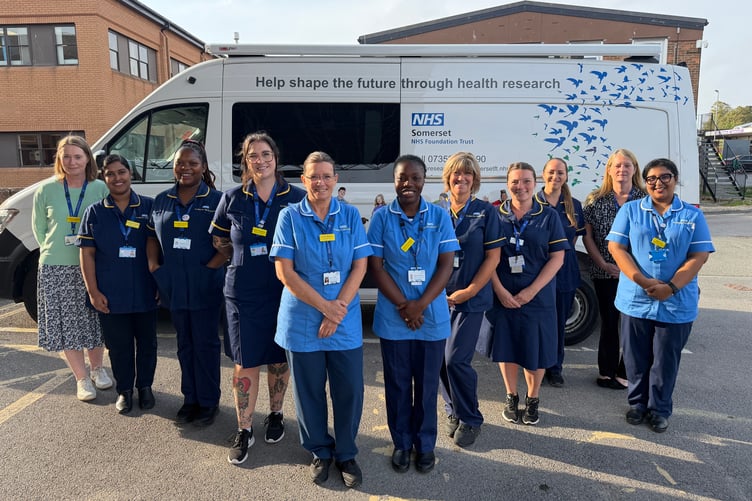
PEOPLE from Black communities across Somerset are being encouraged to take part in a major research programme aimed at improving understanding of health conditions and helping shape future healthcare.
Somerset NHS Foundation Trust’s research team is supporting recruitment to the Improving Black Health Outcomes (IBHO) BioResource, a national study designed to increase participation from Black communities in health research and address long-standing inequalities in medical evidence.
The study is inviting people aged 16 and over from Black ethnic backgrounds, including Black African, Black Caribbean and Black British communities, to take part whether they have a health condition or not. People with a confirmed diagnosis of sickle cell disease or thalassaemia can also join, regardless of ethnic background.
The trust’s research team lead Kate James said Somerset's Black population is growing, making it increasingly important that health research reflects the communities it serves.
“Historically, people from Black communities have been underrepresented in health research,” she said. “As a result, much of the evidence used to develop medicines and treatments has not always reflected the diversity of the population.
“We know that some medicines can affect people differently, which is why it is so important that research includes people from a wide range of backgrounds.
“The Improving Black Health Outcomes BioResource aims to address that by encouraging more people from Black communities to take part in research and helping us build a better understanding of health and disease.”
Participants who join the programme are asked to complete a questionnaire and provide a blood or sputum sample. The samples are stored anonymously and securely within a biobank and can be used to support future research into a range of health conditions.
The information collected will help researchers better understand conditions that affect Black communities and support the development of more effective and equitable treatments in the future.
Kate continued: “When people sign up, we can meet them at a time that works for them at our mobile research unit based at Musgrove Park Hospital, where we can quickly and easily collect a sample.


“The samples are anonymous and are linked to a questionnaire that helps researchers understand more about a person's health. Together, this information creates an important resource for future studies.”
Nationally, more than 6,000 volunteers have already signed up to the IBHO BioResource, which was launched in partnership with organisations including Genomics England and King's College London to improve understanding of health conditions and their impact on Black communities.
“This is about improving healthcare for future generations,” added Kate. “People who take part may not see a direct benefit themselves, but by contributing a sample they can help improve our understanding of health conditions and support the development of better treatments for others in the future.
“Every person who joins helps ensure research is more representative and that future healthcare is based on evidence that reflects the diversity of our communities.”
Anyone interested in taking part can register their interest through the NIHR BioResource website
Comments
We've recently changed our login process. If you have an account for commenting, you will need to re-register on the login window.
This article has no comments yet. Be the first to leave a comment.