

Weather report
’A peck of March dust is worth a king’s ransom,’ goes the old saying. A peck was a two gallon measure for dry goods, and it referred to the importance to farmers of dry weather in spring for getting seed sown in the fields, to guarantee a harvest later on. March dust this year seemed very improbable.
March began with a chilly breeze from the north-west bringing rain or showers and bright spells before a deep depression over France changed the wind direction to an easterly on March 4. A damp, gloomy day was followed by a night with heavy rain – 15mm or 0.6 inches in Wellington – and then a raw, damp day with a maximum temperature of just 5C (41F). Skies cleared that evening to allow the first frost for more than six weeks.
The following week was a bit more spring-like. With winds again from a westerly quarter, there was some rain every day, but temperatures were above average by day and night, accelerating grass growth and causing some shrubs to break bud prematurely. Sunshine was in fairly short supply, but even so on March 11 the temperature in Wellington reached 15.6C (60F), as warm as we should expect so early in the season. March 13 – 15 saw further spells of quite heavy rain, so by mid-month we had already received 100 per cent of the average monthly total. The ground remained saturated.
 Ban and suspended prison term for motorway driver who police had to stop with stinger
 "We are completely fed up" - Wiveliscombe residents demand action
 Planning conditions in Somerset being enforced by West Midlands officers
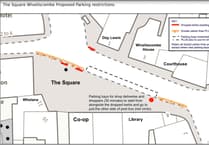 Special meeting of Wiveliscombe councillors to look again at town centre parking
March 16 was remarkable: sunny all day, with little wind, and feeling like spring. The following two days saw temperatures of about 15C (59F), with what would prove to be the month’s last rainfall – not much, at that – overnight on March 18/19. Thereafter, high air pressure dictated our weather. Initially, this meant that a stiff breeze from the east kept temperatures down a bit, but there was plenty of sunshine and things began to dry out at last.
With the winds easing and skies remaining clear, we had six successive nights with a frost, the lowest temperature of minus 2.9C (26.8F) on March 26 being cold enough to scorch tender young shoots in the garden. On the positive side, almost unbroken sunshine during the week commencing Sunday, March 22, gave us our sunniest March week for at least ten years, in what may prove to be the sunniest-ever March in South-West England. In spite of the frosty starts, daytime maxima were often above average, although there was more of a breeze from the north-east to end the month, temperatures struggling into double figures by day.
Overall, March 2020 was only marginally warmer than February, the mean temperature of 7.2C (45F) being 0.2 degrees above average. Total rainfall amounted to 83mm – 3.3 inches – five per cent above normal.
On the subject of rainfall, a letter from a Wiveliscombe-based reader of this column prompted me to carry out some detailed searching of the records. The conclusion is that between September 21 last year – when the ’wet season’ commenced – to March 20 this year, 914mm (36 inches) of rain fell on Wellington. One in four years since 1960 had less than that in total. Only in 1976-77 and 2013-14 did more rain fall during the equivalent period, but with 142 days with measurable rainfall in Wellington, the 2019-20 autumn and winter have been by far the most persistently wet.
Simon Ratsey
WWN weather correspondent
Comments
This article has no comments yet. Be the first to leave a comment.