

Work on creating a permanent community green space and forest garden at Fox’s Field in Wellington is gathering pace.
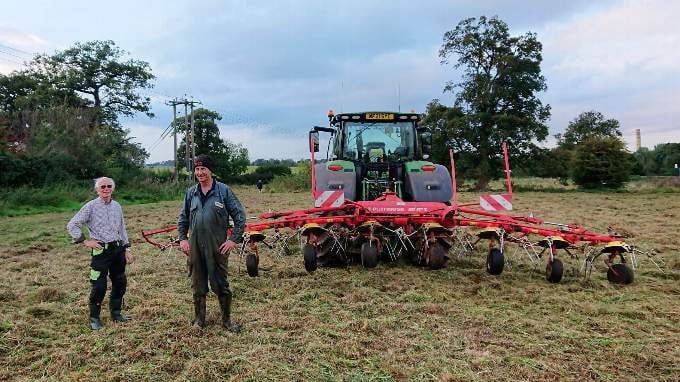
The field has now been mown and baled by a local contractor and the Wellington Mills Community Interest Company (CIC), which is leasing the land from Somerset West and Taunton Council, has succeeded in a grant application for funds to provide information and interpretation boards at the site.
Anita Roy, a director of the CIC and a key member of Transition Town Wellington (TTW), which organised the work, said: “Do go walk round the field now if you can – it’s quite a transformation. Hopefully we’ll have nice clear bits for the wildflower meadows and good nutritious mulch for the new trees and planting.”
TTW volunteers spent several days combing the eight-acre field for debris and obstructions after the first attempt at mowing ended abruptly as the cutter arm struck an uncharted drain cover. The subsequent inspection employed metal detectors and sharp eyes before the field was pronounced safe to mow.



Somerset Community Foundation (SCF) is providing £2,400 towards the cost of installing information and orientation boards about the project at entrances to Fox’s Field.
Carrie Blogg, from the CIC, said: “We’re enormously grateful to SCF for supporting our work at Fox’s Field. We have already received support from other funders including Wellington Town Council and the Nineveh Trust that will help pay for site preparation works and the plants for the forest garden.”
Seed funding from Transition Network has also enabled TTW to hold a series of public consultations over the past nine months with well over 300 people attending to give their ideas and feedback on plans for Fox’s Field Field.
A forest garden is a garden modelled on the structure of young natural woodland, utilising plants of direct and indirect benefit to people. It may contain large trees, small trees, shrubs, herbaceous perennials, herbs, annuals, root crops and climbers, all planted in such a way as to maximise positive interactions and minimise negative interactions, with fertility maintained largely or wholly by the plants themselves.
Comments
This article has no comments yet. Be the first to leave a comment.