
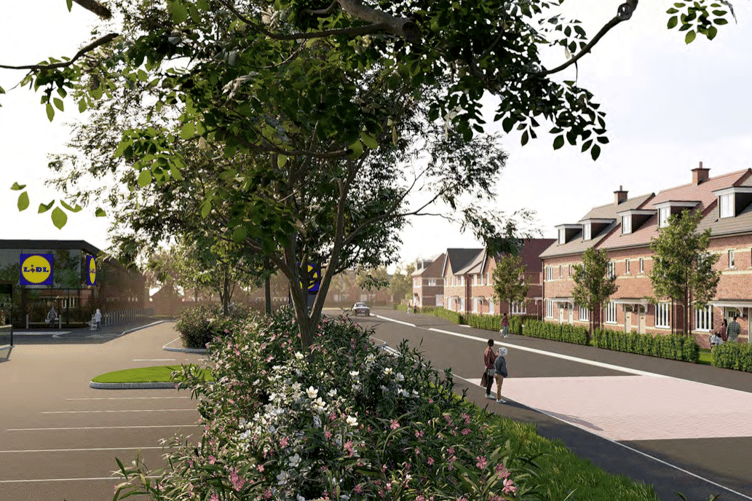
TOWN councillors will be asked on Monday (July 6) if they want to take ownership of the open spaces on one of Wellington’s newest housing estates to ensure residents receive value for money services.
Bloor Homes is building 178 homes on an extension to the Longforth Farm estate behind the town’s Lidl supermarket and bordering the site of a planned new railway station.
The company has offered to give nearly 9.5 acres of green spaces to the council and pay a lump sum of £200,000 for its maintenance rather than put it into the hands of a private management company which would charge residents every year.
It would include a play area with seven pieces of equipment for older children and five pieces for children aged four to 10 years, plus a trim trail comprising eight dynamic outdoor play structures.
 Wellington community hub could see council helping to hand out crisis funds
 Town council promises to improve Wellington Cemetery after new contract agreed
 Local NHS chief is sorry for failings in maternity services at Musgrove
 Woman with 'wicked sense of humour' marks centenary birthday with family and friends
Councillors agreed the principal of taking over the land three years ago, before Bloor acquired the site.
More land used for a sustainable urban drainage scheme could also be handed over, but councillors have been told clarification was still needed.
Town council chief executive Dave Farrow said the deal would include large ecology fields to the west of the site and land to the north of the railway line adjoining a proposed Wardleworth Way development.
Mr Farrow said any handover was not likely to happen until mid-2030 and Bloor in the meantime would remain responsible for maintaining the open spaces.
He said: “The open spaces would only be handed over to the council once the council is satisfied the land, public open space infrastructure, and equipment have been installed to an acceptable standard.
“Acceptance of the open spaces would be consistent with the direction of national policy, which is seeking to reduce reliance on private estate management companies and increase the adoption of amenities such as green spaces, drainage, and other communal infrastructure by public authorities, such as town and parish councils, where appropriate.”
Mr Farrow said the Government had been consulting on ‘reducing the prevalence of private estate management arrangement’ and seeking views on proposals to increase adoption of estate amenities on new developments by local authorities.
It wanted to introduce common standards for adoptable amenities, consider mandatory adoption for certain public infrastructure, remove financial incentives which made non-adoption attractive to developers, and improve transparency and homeowner protections.
Mr Farrow said the £200,000 ‘commuted sum’ from Bloor would avoid any immediate impact on the town’s precept, the amount it charged council taxpayers each year.
It was estimated the money would cover at least 10 years of maintenance, and probably longer.
Mr Farrow said: “Once the commuted sum has been exhausted, any continuing costs will need to be met from the council’s revenue budget, reserves, external funding, future developer contributions where available, or the precept.
“The proposed transfer would enable the council to secure direct public management of important open spaces associated with a major development in the town.
“This would support the council’s wider objectives for accessible green space, biodiversity, community wellbeing, and place-making.”
Comments
We've recently changed our login process. If you have an account for commenting, you will need to re-register on the login window.
This article has no comments yet. Be the first to leave a comment.