

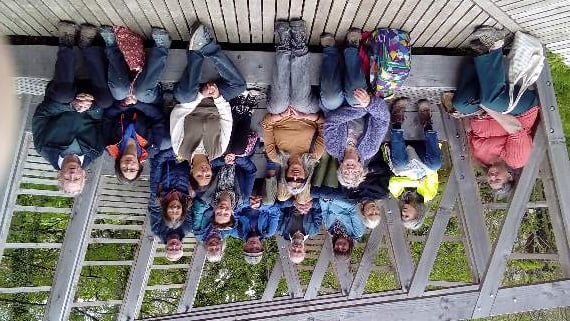
ENVIRONMENTAL activists from the Wellington area have been on a trip to the Dorset Wildlife Trust’s centre at Kingcombe.
The Transition Town Wellington (TTW) group has been seen all over town this spring planting wildflowers. Volunteers from the group have helped to create wildflower habitats at Dobree Park in Rockwell Green, at Post Close and a host of other sites around town. They have even planted up a small bed at the entrance to Wellington Sports Centre with pollinator-friendly herbs.
The decline in the number of insects in our countryside has been catastrophic over the past few years. Through the loss of habitat and the use of pesticides, insects such as bees, butterflies, wasps and moths have disappeared. Not only is this disastrous for the pollination of crops, it is bad news for all the birds and other wildlife that depend on them for food.
TTW’s Anita Roy said: “There’s a real sense of urgency around environmental issues now. So many species are vanishing – we have to do something before it’s too late. Somerset Council’s Pollinator Action Plan is a great initiative but it’s up to us all to put it into action.”

-teacher-and-coordinator.jpeg?width=209&height=140&crop=209:145,smart&quality=75)

To enhance their own understanding of what it takes to make a truly biodiverse thriving wildflower habitat, 17 members of TTW’s team spent the day with Nick Gray, Dorset Wildlife Trust’s conservation officer, on a walking tour of the meadows around Kingcombe. This ancient patchwork of fields has never been treated with pesticides or chemical fertilisers, and is a haven for butterflies, moths, bees, dragonflies, damselflies and all kinds of insect and birdlife. The group spotted sweet vernal grass, bird’s foot trefoil, pink campion and pignut, as well as orchids beginning to show among the grasses and bluebells.
Sue Rickard said: “Kingcombe is an absolute gem of a place, a wonderful example of how farms used to be run before intensive farming became the norm, and how they could be run again. There’s a sense that the beautiful meadows are not just lovely to look at but are full of little creatures and plants living in balance and contributing to the health of the land throughout the seasons.”
Helen Gillingham was struck with how beautiful the tight-knit leaves were and is planning to make a low meadow in her own garden. She said: “I’m trying to remember all the tiny plants like bugle and alchemilla vulgaris, so I can treat my lawn differently. Rather than fertilising and sowing grass seed this autumn, I’m going to try sowing lots of wildflowers. Even if it’s just for the different leaf textures, maybe a lawn like this would resist drought better than my lawn last year.”
Sue Beckinsale, who was also impressed by the abundance of plant life, said: “At Kingcombe the meadows have never been treated with herbicides or artificial fertilisers and as a result there is an average of 30 plant species per square metre rather than the usual three to five on re-seeded ground. I am so grateful that Kingcombe exists.”
If you would like to enjoy the wildflower meadows at Kingcombe, now is the time to do it. Visit www.kingcombe.org to find out more about it, the accommodation on offer there, and the workshops and events run throughout the year. If you would like to join Transition Town Wellington and find out what else it has been up to, visit its website at ttw.org.uk
CONTRIBUTED
Comments
This article has no comments yet. Be the first to leave a comment.