

AN interest in photography and family history during lockdown has morphed into so much for a Somerset historian.
Richard Cooper-Knight has built a whole online archive recording the real lives of the war dead buried in Somerset ’s World War I graves.
He discovered his first grave quite by chance while out walking in the Covid pandemic after moving to Somerset in 2020.
“During those times, I went out with my camera just photographing local villages. In one of the villages, in Dinder, near Wells, I photographed a Commonwealth War grave.
“When I got back home, I wondered what I could find out about that person and I was surprised about how much information I could find.”
That first grave marked a turning point. Richard started actively looking for local Commonwealth War graves and set himself a target of photographing every First World War I grave in the county.
His search starts, he says, with the Commonwealth War Graves Commission website: “I just build up a list of all of the Somerset ones; that gives you a list of the churchyards and then the names within those churchyards.”
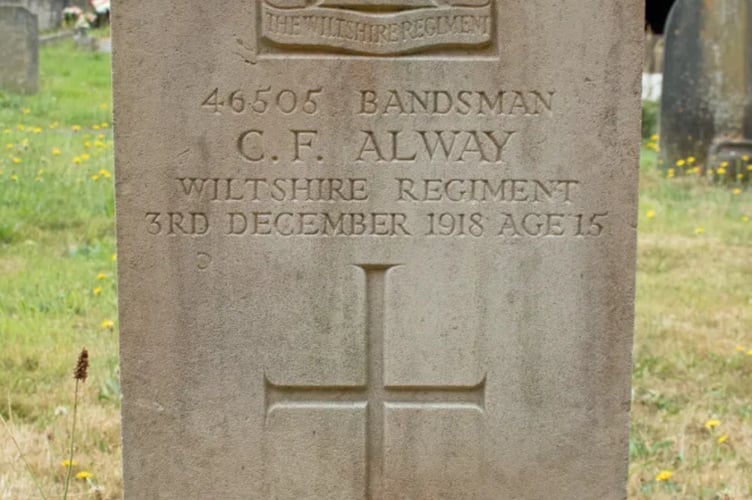
He then goes out to find the grave, photograph it and when he returns, uses online resources to research the lives of the people he has found.
“There's a website called Forces War Records which has all the military records on. And then the British Newspaper archives has all kind of different newspapers dating back right to the 1800s.

“So I have a combination of online resources and then just build up a picture.”
For Richard, it isn't really about the military career of the person in the grave, but the life they left behind to go to war.
“You've got a name, you've got a regiment and a date of death, but for me, that person is more than just that. They had a family, they had a wife or children, they had aspirations.
“That's what piques my interest, rather than the military specifics about where they served.”
During the first world war, those killed on the Western Front were buried overseas, Richard says, rather than being returned home.
“For those who died in the UK, you don't get as many who were killed in action, but you do get a lot who died through illness.”
As was the case with Wellington man, Clifford Frederick Alway who was born on February, 2 1903 the fifth of fourteen children to Samuel and Ann Alway.
Samuel was a farm labourer and butcher and, when war broke out, he stepped up to play his part, enlisting as a driver in the Royal Field Artillery.
Richard said: “By the summer of 1918, Clifford enlisted in the Wiltshire Regiment. It seems likely, given that he was only fifteen years old, that he had lied about his age, as so many young men did.”
He joined the 3rd (Reserve) Battalion of the Wiltshire Regiment as a bandsman and was posted to Kent as part of the Thames and Medway Garrison.
It was here, Richard says, billeted in crowded barracks, where bandsman Alway contracted influenza and pneumonia.
Admitted to hospital in Aylesford he succumbed to his illnesses and passed away on December 3, 1918. Tragically, Clifford was just 15 years and 304 days old.
His body was returned to Somerset for burial and he was laid to rest in Wellington Cemetery.
Richard’s hobby has developed over the years from a passion into an obsession, he admits. His comprehensive Death and Service website archive sits alongside a series of books of the same name listing the stories of the war dead he has discovered.
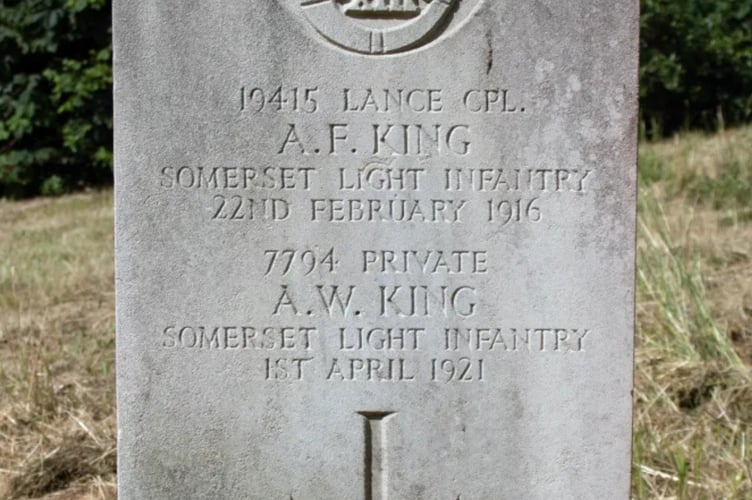
The stories of close to 2,000 servicemen and women are catalogued including all 843 WWI war graves in Somerset.
Richard has extended his search to outside of the county with some surprising results.
During a visit to his old home town of Worthing in West Sussex, Richard discovered the grave and sad story of yet another young recruit.
“I was researching this one grave of a lad of 16, 17. He'd seen his older brothers sign up and go off to war, and as soon as he was able to, he felt he wanted to do his bit.
“So he lied about his age, got into the army and was sent off for training.”
Again, in tightly packed barracks, disease was rife and he came down with meningitis and died. The young soldier’s body was brought back to Worthing and laid to rest.
“Doing the research and looking back through the census records, he actually lived in the house that I lived in, in Worthing,” added Richard.
So far Richard has photographed and researched graves across 19 counties, representing more than 140 regiments from the Channel Islands, to Orkney, to Wales, Northern Ireland and back.
Now it’s hard for him to go anywhere without taking a look at the local graveyard.
He added: “We don't go on holiday specifically to look at graves, but if there happens to be a churchyard in the area, then I'll nip in and just photograph it.”
Comments
We've recently changed our login process. If you have an account for commenting, you will need to re-register on the login window.
This article has no comments yet. Be the first to leave a comment.