
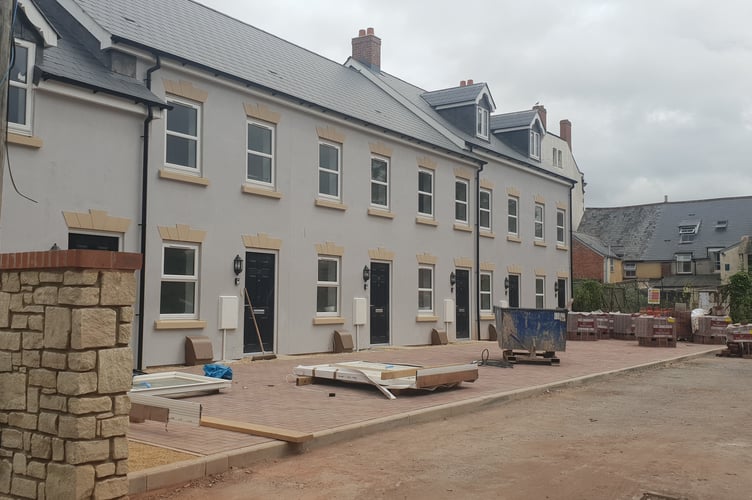
HUNDREDS of new homes should soon be able to be built across Somerset following the introduction of a new ‘phosphates credits’ system.
The construction of about 18,000 new homes in total has been held up following a Natural England ruling prohibiting any net increase of phosphates on the Somerset Levels and Moors.
Most of the Somerset West and Taunton Council (SWT) area drains onto the levels, which is a protected wildlife site of international importance, meaning proposed development have been put on hold unless it could be shown how phosphate emissions could be mitigated.
Now, SWT has looked at various mitigation ideas and has set aside £2 million to create new wetlands and adopt a new system of ‘phosphate credits’ which could deliver around 700 new houses in the River Tone catchment area.




Phosphate credits are created by measures taken by the council to offset the impact of existing housing – whether by retrofitting its council houses to reduce waste water, creating new wetlands, or asking developers to set aside ‘fallow land’ near new housing - as was recently proposed, but ultimately rejected at a planned development of 80 homes in Cotford St Luke.
Each credit equates to one kilogram of phosphates being removed in a year, with the council’s current efforts having generated just over 65 credits at a cost of £3.54 million.
To unlock some of the proposed new homes, developers would have to purchase the credits from the authority, at a rough cost of £54,222 per credit, secured through a legal agreement once planning permission is formally issued.
SWT principal planning officer Paul Browning said in a report: “As a rough guide, we would expect to be able to release somewhere in the region of between 150 and 780 homes within the River Tone sub-catchment.
“Based on the known phosphate requirements of planning applications currently held in abeyance, the typical cost per home is likely to be in the region of at least £5,500.”
Mr Browning said the ‘nature-based solutions’ would only go so far to easing the backlog, and that SWT would continue to lobby both Defra and the Department for Levelling Up, Housing and Communities (DLUHC) to implement long-term solutions for Somerset and other affected parts of the UK.
SWT also suggested that priority would ‘quite often’ be given to smaller developments, where affordable housing was not legally required, in order to avoid viability assessments. In addition to the new system, SWT will also create a new policy allowing the use of septic tanks within any new development only as a last resort.
Comments
This article has no comments yet. Be the first to leave a comment.