
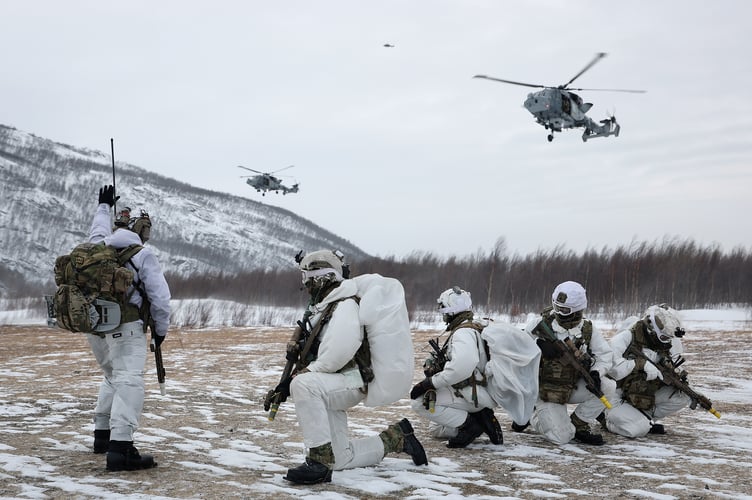
ROYAL Marines from 40 Commando, based in Norton Manor Camp, near Norton Fitzwarren, will have an edge in Arctic combat after accomplishing a number of historic firsts as the UK looks to quickly develop how it utilises drones in warfare.
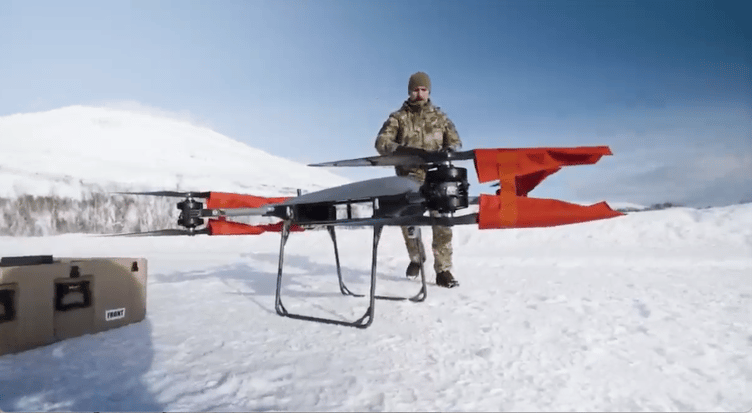
The Commandos are operating their heavy-lift Malloy Aeronautics T150B quadcopters, primarily used for logistical missions, during a winter deployment to northern Norway in support of major NATO mission rehearsals in the region.
The marine drone operators of Malloy Flight, Delta Squadron, part of the Devon-based Commando Logistic Regiment, successfully carried out a number of milestone sorties, including transporting 81 mm mortars, machine guns, ammunition, blood, and a bomb disposal robot across the battlefield.
The missions strengthen the Commando force’s ability to fight across the extreme conditions of the Arctic while reducing the need for high-risk, long range ground manoeuvres, relying on drones to make logistical deliveries instead of navigating across the unforgiving environment in all-terrain vehicles or on skis.


The three-man team faced temperatures as low as -28C, pushing their machines to the limit as they carried out flights in the Blåtinden Ranges, in the Troms region of Norway.
The first operational deployment to Norway with the Royal Marines saw Delta Squadron assist mortar troops from 40 and 45 Commando to keep them moving forward without the need to carry their own weaponry.
A fire support group from Charlie Company, 40 Commando, also benefitted from the help of the Malloys, with machine guns and tripods moved to new positions, taking the burden away from the teams on the ground.
The Royal Navy is developing its drone operations as it looks to keep pace with developments seen on the battlefields of Ukraine.
Malloy flight commander Colour Sgt Dan Lyness said: “As the first team to integrate into ground forces in the UK we have been able to bring our experience from working in the UK to the high north and learn to operate with all the challenges of operating in temperatures below zero.
“This is a completely new capability that we are learning to exploit to enable greater movement on the ground with a reduced risk to life, leveraging modern technology to our advantage.
“Heavy lift uncrewed aerial systems (UAS) have been used extensively in the Russia/Ukraine conflict with many new-use cases, so it is critical we master this emerging capability quickly.
“Training in the high north is a key part of that.”
Defence Secretary John Healey, a Parliamentary group of 24 MPs, and defence seniors and commanders were also given briefings.
The Malloy T150B, which was declared ready for front-line operations last year after years of rigorous trials, can lift up to 68 kg, fly up to 40 minutes, and has a top speed of 60 mph.
It is designed to carry ammunition, weaponry, food, team and medical supplies to Royal Marines operating in all manner of extreme environments.
Malloy Flight also helped medics develop tactics and procedures for flying blood boxes and medical packs to the front-line.
Comments
We've recently changed our login process. If you have an account for commenting, you will need to re-register on the login window.
This article has no comments yet. Be the first to leave a comment.