
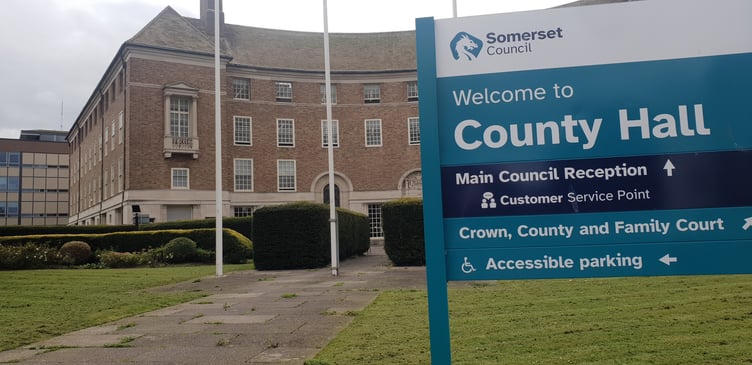
Near-bankrupt Somerset Council is set to ask the Government for exceptional financial support (EFS) for a fourth successive year to help it balance its 2027-28 budget.
The Government has previously allowed the beleaguered council to increase council tax bills by more than the 4.9 per cent limit beyond which it would usually have to put the idea to a vote by residents, and allowed it to use income from selling assets to pay day to day expenses instead of only being used on capital projects.
But, last year, the Government lost patience and rejected Somerset’s bid for an 11 per cent council tax rise and instead issued the council with a ‘Best Value Notice, a last step before sending in commissioners to take over the running of the authority.
The council’s then-finance officer Clive Heaphy warned the Government would not grant any further EFS and any more help would come in the form of direct intervention.
Now, the authority has admitted it is again likely to need to apply to the Government for EFS to set a balanced budget, although it would probably be in the form of a capitalisation direction, which would allow it to borrow money and/or sell assets to pay for day-to-day spending, rather than another higher than permitted council tax rise.
The council’s latest budget report shows it faces overspending by £23.9 million this year, which it said was driven by rising costs and demand in children’s services, and the removal of NHS funding from its adults with learning disabilities budget.
This meant the budget gap for the next financial year could be an unbridgeable £71.3 million, hence the need for another Government bail out.
Council leader Cllr Bill Revans said: “Our aim is clear and remains the same as in previous years.
“We must continue to challenge spending, find additional savings, and take the steps necessary to avoid a Section 114 notice (bankruptcy) which would lead to expensive commissioners putting up council tax and making blanket cuts without considering the local impacts.
“We have worked tirelessly in recent years to address soaring costs and demand for our services.


“We have taken difficult decisions, found savings, and we have a council-wide transformation programme which is delivering better outcomes for our residents at lower costs.
“But, our challenge gets harder and harder every year.
“We continue to see more children coming into our care with increasing levels of need.
“We are facing higher costs as a result of changes to NHS funding.
“We have lost around £16 million from the Government in remoteness funding, despite obvious higher costs running public services in rural areas.
“We have also lost around £11 million from the review of business rates.
“Without external factors like this, we would not have a budget gap and would be on track to set our budget without EFS as we had planned.”
The budget proposals will be discussed by scrutiny committees during December and January before final decisions are taken first by the executive, and then by full council next February.
Comments
We've recently changed our login process. If you have an account for commenting, you will need to re-register on the login window.
This article has no comments yet. Be the first to leave a comment.