
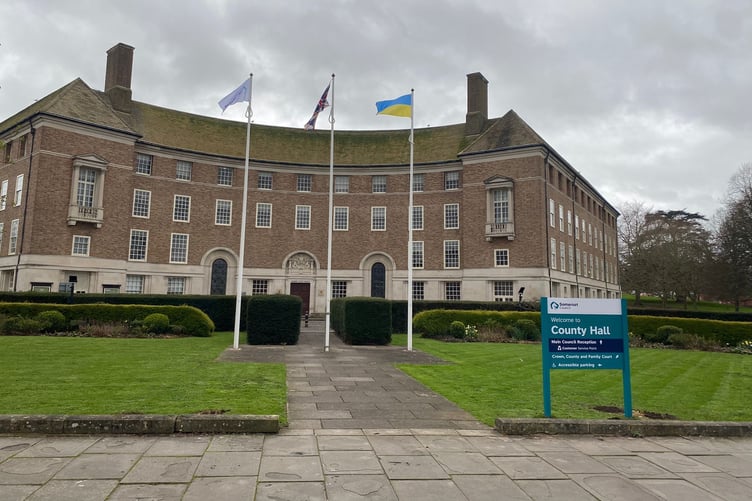
STRESS, anxiety, and ‘psychological ill health’ are driving a high rate of sickness among officers of near-bankrupt Somerset Council.
The council has lost nearly 42,000 working days to staff sickness in the past year, just over 10 days for every one of the local authority’s thousands of employees.
Conservative opposition group leader Cllr Diogo Rodrigues called on the council to urgently address the situation to protect essential public services.
But, the council said its sickness rate was below the public sector average and it was taking steps to provide early support for staff in a bid to reduce long-term absences.
Cllr Rodrigues said: “Last year, this council lost 41,822 working days to staff sickness, an average of 10.04 days for every full-time equivalent employee.
“The Office for National Statistics says the UK average was just 4.4 days per worker in 2025.
“That means sickness absence at Somerset Council is running at more than twice the number of days per person recorded across the UK workforce.
“The associated employment cost to Somerset Council was £6.3 million, but the bigger cost to residents is 41,822 days when staff were not available to answer phones, complete education health and care plans, undertake care assessments, complete planning applications, or deliver other essential services.
“Cut sickness absence by just a quarter and we would recover more than 10,000 working days every year.
“Somerset Council is clearly not a healthy organisation.”




Somerset executive Cllr Theo Butt Philip said: “Our sickness rate is below the average for the public sector, which the Chartered Institute for Personnel and Development’s 2025 employers’ survey reported as 13.3 days per year.
“Every day lost to sickness has an impact, meaning the same amount of work still needs to be done but by fewer people.
“We are committed to improving the health and well-being of our staff, with the obvious benefits that will bring to them, to the council, and the people and communities of Somerset.
“Our analysis shows stress, anxiety and psychological ill health are the largest causes of sickness absence, accounting for a quarter of the total.
“This reflects the wider national position where mental ill health is a leading cause of long-term absence.
“We are strengthening our sickness absence management policy, improving training and support for managers, enhancing stress risk assessments and well-being provision, and developing targeted interventions in services with the highest levels of sickness and stress-related absence.
“We will monitor progress closely and take practical, evidence-led action to reduce avoidable absence, strengthen workforce resilience, and protect services for residents.”
Cllr Rodrigues later clarified he was not attacking individual staff members for being ill, rather the council’s ‘capacity to deliver’ services in the face of high sickness rates.
He said: “This is not criticising hard-working council staff when they are ill.
“They deserve to work for an organisation that looks after them, supports them, and does not leave them carrying unsustainable pressures.
“Getting sickness down is good for our staff, good for residents, and good for the taxpayer.”
Comments
This article has no comments yet. Be the first to leave a comment.