

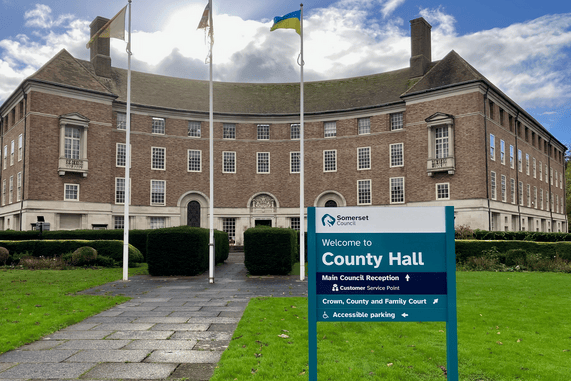
SOMERSET Council will be able to set a balanced budget for the next 12 months, but remains on the Government’s ‘naughty step’.
Executive councillors have voted to provisionally approve a 2026-27 budget which will go forward to the full council for final approval on Wednesday (March 4).
It includes a 4.99 per cent rise in council tax after the Government blocked a bid to impose an 11 per cent increase.
The council will also receive £30 million of ‘exceptional financial support’ (EFS) from the Government, allowing it to either borrow money or sell of assets to pay for day to day spending, the third successive year such ‘one-off’ help has been granted.


But, at the same time Local Government Minister Alison McGovern has ordered an investigation into the financial management of the council due to her ‘significant concerns’ and warnings from external auditors.
Council interim chief financial officer Clive Heaphy warned councillors they would not receive a fourth year of EFS, leaving the authority in a race against time to bring spending under control and avoid effective bankruptcy before the 2027 local elections.
Mr Heaphy said: “It is critical the council now takes real ownership of its decision-making.
“We will not be getting a fourth year of exceptional financial support.
“If it did, it would be with Government intervention.
“We have to get control of our own lives, and that essentially means cutting costs one way or another, either by reducing services, or through transformation.
“The Government is clearly saying ‘you are on the naughty step, and you have still more work to do’.
“But, the fact that they are minded to support us financially means they recognise that we are on the right trajectory and are giving us the chance to manage this ourselves.
“There is no reason why Somerset Council cannot get out of its troubles and find itself in a balanced position, delivering excellent services across the board.”
Mr Heaphy said a Government fair funding review only saw ‘marginal’ benefits for Somerset, given the rural nature of the county.
He said: “We are one of the top 10 most rural authorities in the country.
“Nearly 50 per cent of our population live in rural settlements, nearly 290,000, that is about the size of a London borough.
“We have an ageing population, and we are ageing much more rapidly than many authorities, which brings future challenges.”
Deputy council leader Cllr Liz Leyshon said it was likely that Somerset’s council tax levels would remain lower than the rest of the Westcountry for the next few years after the Government ruled out this year’s proposed 11 per cent rise.
Cllr Leyshon said: “The rate for a band D property in Somerset is unlikely to change now.
“We will remain lower than the national average and lower than our geographical neighbours, but the council tax base will continue to grow.”
Some relief on the council’s long-term financial pressures came recently when the Department for Education said it would write-off up to 90 per cent of Somerset’s special educational needs and disabilities £116 million debt.
Comments
We've recently changed our login process. If you have an account for commenting, you will need to re-register on the login window.
This article has no comments yet. Be the first to leave a comment.