

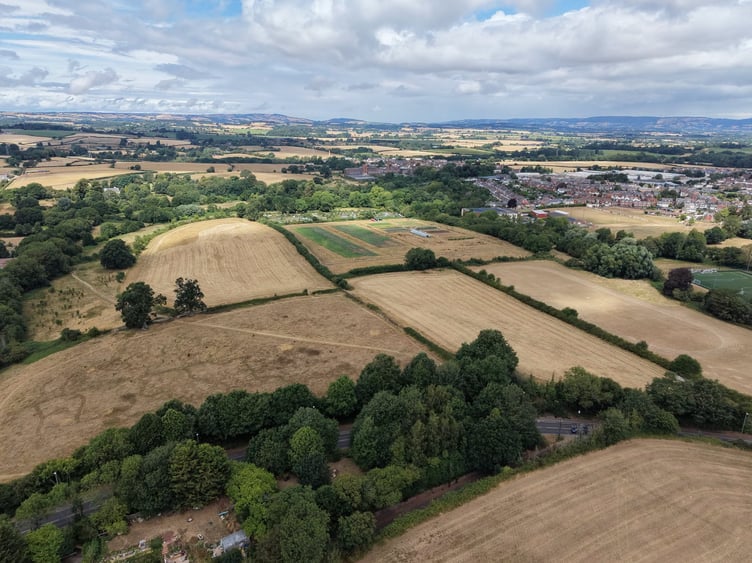
THE impact of the Westcountry’s drought on Wellington has been dramatically illustrated by images captured by drone for the town council.
Exeter Airport-based Merrett Survey Ltd flew a drone over parts of Wellington for the council this week.
One image shows Fox’s Field, beside the derelict Tonedale Mill buildings, and the sizeable area of land which was damaged recently by youngsters who deliberately set fire to hay bales.
Another looks down on Wellington Cemetery, where green trees are dotted in a Sahara-yellow colour landscape of dried earth.
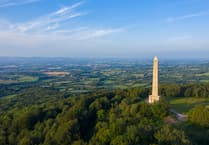
A third gives a view over Hilly Head and the community farm site in the Basins nature reserve with the Quantocks and Brendon Hills on the horizon and the same desert-type conditions stretching between the them.
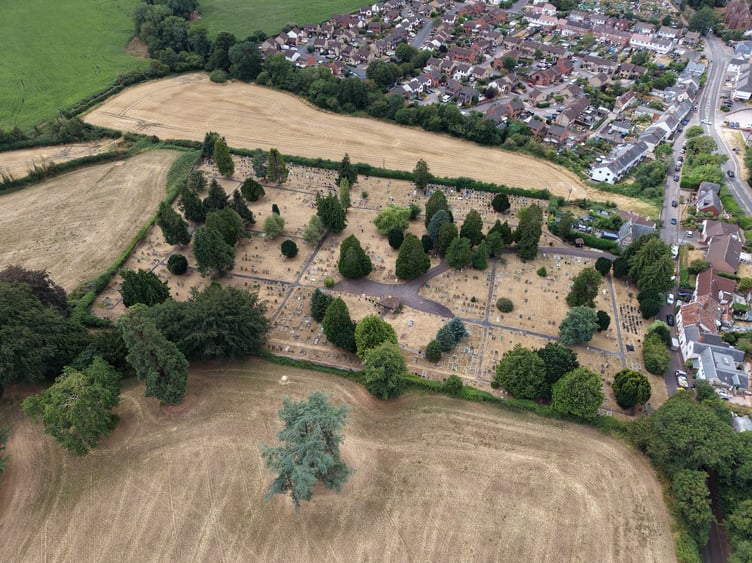
A town council spokesperson said the images emphasised the need for people to exercise caution during the drought conditions and to follow the advice of Devon and Somerset Fire and Rescue (DSFR) to ‘stay safe, preserve water, and help prevent wildfires’.
The spokesperson said: “In tandem with this, we are reminding people that the public are not permitted to use barbecues in any of our open spaces.”
A DSFR spokesperson said people should avoid lighting fires, having campfires, or using disposable barbecues, and should at all times stay with any barbecue or fire pit and keep at hand a means for putting them out,

Cigarettes or matches should never be discarded onto dry grass, and any fires in the open should be reported quickly using 999.
Wessex Water is asking people to help it avoid the need for a hosepipe ban this summer by using water wisely and cutting back on non-essential use.
Water supply director Will Willoughby warned: “If demand does not reduce, we will need to introduce more formal restrictions to protect water supplies, which is why we are asking customers to work with us now to help avoid this.
“We know a hosepipe ban would not be welcome news for our customers, especially during the summer holidays.
“A ban is a last resort for us, and we do not want to introduce one, but we do need customers to help.
“If all customers can make small changes to their daily water use habits, this will make a big impact and help keep water flowing for each other, businesses, and the environment.'”
Mr Willoughby said water resources across the region remained stable, with surface water reservoirs 58 per cent full at the end of July.
However, there had been months of unprecedented dry weather and heatwaves, and forecasts were for another six weeks of hot and dry conditions.
Mr Willoughby said: “No restrictions have been required in the region for 50 years, but they remain an option to protect water resources for customers, communities, and the environment over the longer term.”
He said demand was currently more than a 30 per cent above average for this time of year, the equivalent of nearly 4,000 hosepipes running constantly every day, which was impacting underground reservoirs, which normally replenished quickly.
Comments
This article has no comments yet. Be the first to leave a comment.