
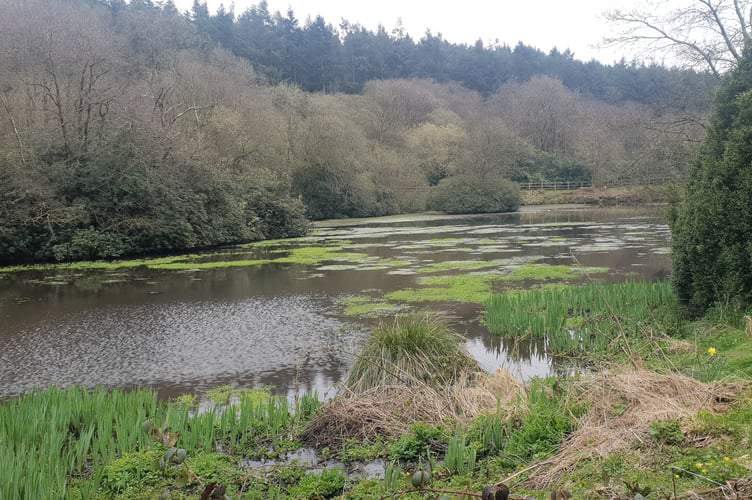
WATER quality in a Blackdown Hills river has been found to be ‘much improved’ as a result of activity by beavers.
Exeter University final-year Geography student Maddy Tattersall has been studying the ‘beaver effect’ near the head of the River Otter, which rises close to Otterhead Lakes.
Beavers are believed to have migrated in 2022 to the lakes, between Bishopswood and Churchinford, from a population which had been living wild near Ottery St Mary.
Ms Tattersall used Otterhead Lakes as a study site for her undergraduate dissertation research project investigating the impact of beaver dams on water quality.



She said: “Beavers are often described as ecosystem engineers, a term used to explain how certain species physically modify their environment to suit their needs.
“By building dams, beavers slow river flow, create ponds and wetlands, and reshape the surrounding landscape.
“Over the past decade, a growing body of research has shown these changes can bring many environmental benefits, including improved biodiversity, natural flood management, and better water quality.
“Much of the research in South West England has focused on lowland rivers and agricultural catchments, where beaver ponds have been shown to reduce sediment and nutrient pollution.
“However, far less is known about how beavers influence smaller headwater systems such as the upper River Otter, making Otterhead Lakes a particularly valuable location to study.”
Ms Tattersall spent six months from last April collecting monthly water samples from above and below a beaver dam within the lakes site and measured five key indicators commonly used to assess river health.
She said: “The presence of the beaver dam influenced almost every parameter that I measured.
“Water temperature was consistently cooler below the dam, likely due to increased water movement, pH values were slightly more alkaline downstream, while dissolved oxygen levels were higher, a particularly important factor for wildlife.
“Total dissolved solids, which include tiny, suspended particles and dissolved minerals, were lower below the dam.
“This suggests the beaver pond was acting as a natural filter, trapping sediment and allowing cleaner water to flow downstream.
“Together, these results indicate that water below the dam was clearer and more oxygenated than water above it.”
“The only parameter that showed little change was nitrates.
“Levels remained low both upstream and downstream, most likely because the Otterhead catchment is relatively unpolluted.”
Ms Tattersall said studies in more intensively farmed areas had shown beaver dams could also significantly reduce nitrate pollution, highlighting how local land use can influence beaver impacts.
She said: “Overall, the findings from this project are extremely encouraging.
“They demonstrate beavers have the potential to improve river health, even in smaller upland catchments such as Otterhead Lakes.
“As beaver reintroductions continue across England, evidence from sites like this will be increasingly important for guiding future conservation and catchment management.
“It has been a privilege to carry out this research in such a beautiful and ecologically rich landscape.”
Ms Tattersall said she planned to give a short talk on her findings later in the year for anybody who wanted to know more about the project.
Comments
We've recently changed our login process. If you have an account for commenting, you will need to re-register on the login window.
This article has no comments yet. Be the first to leave a comment.