
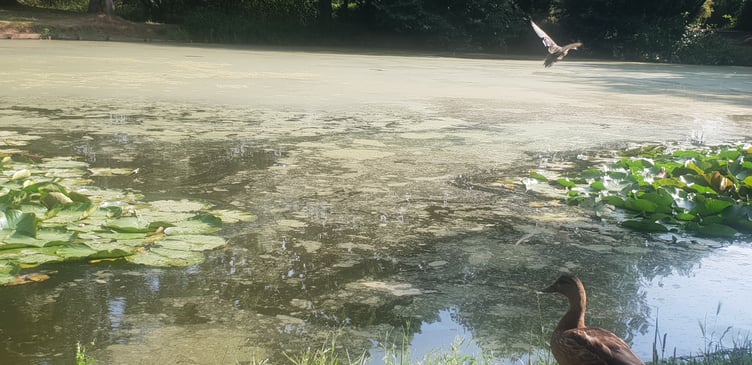
MYSTERY surrounds blue-green algae warnings for people and dog walkers using the Basins nature reserve area in Wellington.
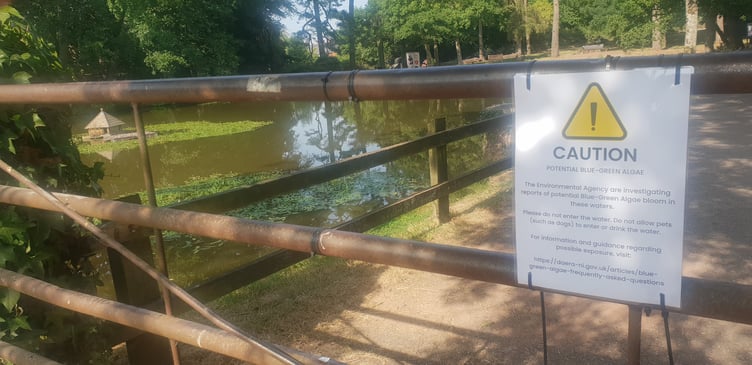
Signs have been erected on gateways to advise people not to enter the two ponds and not to allow their pets to go into or drink the water.
The signs advise that the Environment Agency was investigating a potential blue-green algae bloom after the smaller of the two ponds was almost completely covered by an unpleasant-looking scum.
A town council spokesperson said the authority had agreed to put up signs ‘from a public safety point of view’.
But, they said although the council owned the surrounding land, it did not yet own the ponds themselves and so was not the accountable authority.
An Environment Agency spokesperson told the Wellington Weekly: “A water sample was taken by Environment Agency Officers to analyse the algal bloom visually present on the surface of the water at Wellington Basins.
“Diatoms and green algae were identified as the predominant algal species present, with no blue green (Cyanobacteria) algae found to be at above natural background levels.
“There is no risk from bacteria or algae identified above any usual levels.”


The agency said a lead should be taken by either the town council or the owner of the ponds, Mancraft Ltd, which also owns the derelict Tonedale Mill which was fed by water from the Basins when it was a working facility producing cloths.
Blue-green algae and other algal groups are considered important contributors to aquatic biology in freshwaters because they convert sunlight to energy by photosynthesis, release oxygen and carbon dioxide into water, take up minerals, and produce food chain-supporting substances.
However, they can have a negative effect on the appearance, quality, and use of the water, and can produce toxins which can kill animals and cause rashes and illness in humans.
Comments
This article has no comments yet. Be the first to leave a comment.