
FIXING the date for Easter has again been discussed in the media, some experts saying that the first Sunday in April would be closest to the actual historical date. Besides, Easter in April rather than March would mean better weather, wouldn’t it? Well, analysis of Easter weather over the years suggests that this particular holiday period is more likely to be dry if it’s in March. And for there to be any significant chance of warmth, it needs to fall in the second half of April.
The weather in March this year was basically a cool, dry fortnight sandwiched between two very unsettled spells. The month began with sunny intervals and squally showers on a gusty west wind that then veered to the north. Temperatures were no higher than in early February, the maximum in Wellington on March 6 and 7 being only about 7C (45F).
On March 8 we were warned about a small but intense depression that was targeting the South-West. This gave 20mm (0.8ins) of rain overnight, the north wind gusting to gale force for much of the following day. That seemed to be winter’s final blast, as air pressure rose across Britain, giving prolonged sunshine on March 10 and a notably sunny week to follow. With winds fairly light and from an easterly direction it was pleasant enough by day, although temperatures remained below average with some slight frosts by night.
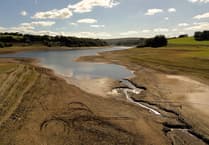
After frost and sunshine first thing on March 18, thick cloud rolled in from the east and stayed for three days. With maxima staying at about 7C (45F), it felt like winter although it was the Vernal Equinox that weekend. At least it remained dry. March 21 saw the sun reappear, a maximum temperature in Wellington of 13.5C (56F) being more like what we expect in spring. Over the next two days there was a slow change in the weather pattern, as high air pressure was replaced by low. Gone were the frosty nights. March 24 was overcast, a little rain bringing to an end our first ‘meteorological drought’ since July 2013.



As Easter approached, hopes must have soared with the unbroken sunshine offered by Good Friday, March 25. This was the best day of the month with a maximum of 15C (59F) in Wellington. But any thoughts of a “barbecue Easter” were then shelved, the next day being overcast and damp, while Easter Day saw sharp showers arrive on a chilly breeze.
Then, in a situation similar to earlier in the month, a kink in the Jet Stream caused a small, deep depression to track across south-west England. This one, already named Storm Katie, gave us severe gales accompanied by heavy overnight rain. The 28mm (1.1 ins) measured in Wellington was exceptional, making it our wettest Easter weekend for at least thirty years. Polar air in the storm’s wake gave a couple of days with intense showers before rising air pressure allowed the month to end with maximum sunshine.
Overall, March 2016 was nearly a degree cooler than average, with a mean temperature of 6.1C (43F), while rainfall was normal at 80mm (3.1 ins). Nights were mostly chilly and there were nine air frosts, but none of them was severe.
Simon Ratsey
(WWN Weather correspondent)
Comments
This article has no comments yet. Be the first to leave a comment.