
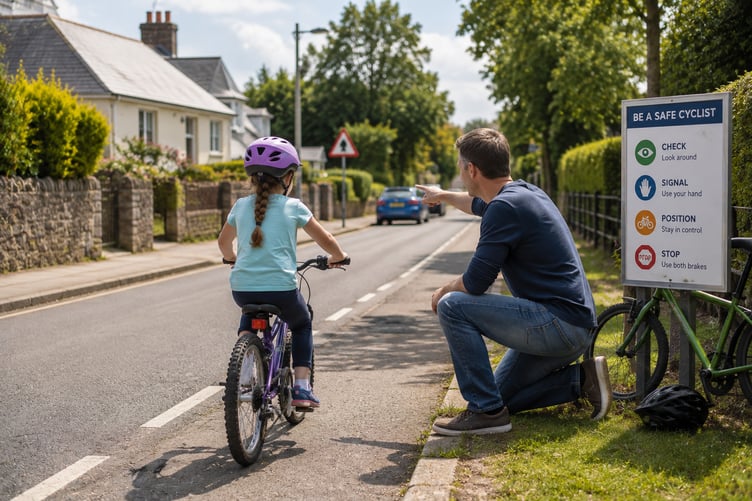
Every parent gets to the point, eventually, where they want their child cycling a bit more independently. Round the block. Over to a friend's house. Without someone trailing behind on foot the whole way, slightly out of breath.
What usually holds families back isn't reluctance so much as just not knowing how to get from stabilisers to real independence without something going wrong somewhere along the way. So here's a practical route through that.
The Basics That Actually Matter
Smooth braking rather than sudden, panicked braking. Looking over the shoulder before turning, every time, not just when they remember. Basic awareness of what's actually happening around them. None of this is glamorous, which is precisely why it gets skipped over so often. Most near-misses trace back to one of these three specifically, so it's worth drilling them on purpose rather than just hoping a child picks them up by accident somewhere along the way.
It's worth saying that none of these habits stick particularly well on the wrong equipment either. A quick look through the kids bikes range before you start is time well spent, since a bike fighting the child undoes a lot of the good the practice is meant to do.
Practising in the Right Order
Driveways and gardens first, always. Then traffic-free paths and parks. Then quiet residential streets. Only after all of that, roads carrying real traffic. Skip a stage, even one, and it tends to show up later as a wobble in confidence rather than an actual gap in skill, which is a harder thing to fix after the fact.
Wellington's genuinely well placed for this, as it happens. A few miles out towards the Devon border, the Grand Western Canal towpath is easy to reach via the A38 and stays largely off-road the whole way. Better still, a short drive towards Taunton picks up the Bridgwater and Taunton Canal towpath, part of National Cycle Route 3, a flat, mostly traffic-free stretch running about fourteen miles between Firepool Lock in Taunton and Bridgwater Marina. Well surfaced for the most part, with village stops and cafes along the way, and plenty long enough to ride as much or as little as a child's confidence allows on any given day, without ever needing to cross a road carrying real traffic.
A child who's completely at ease riding round a quiet local park can still go quiet the moment they're on an actual street. That gap is normal, by the way. It's exactly what the middle stages exist to close, so don't skip ahead just because the park went well last weekend.
What the Bike Should Have




A bike that's the wrong size undermines safety more than most parents expect going in, because a child who's fighting to physically control the thing has nothing left over for what's actually happening on the road around them. Brakes within easy reach, a saddle at the right height, an overall weight the child can actually manage on their own, all of it matters more here than people tend to assume before they've thought it through properly.
And whether that ends up with you wanting bikes for boys or girls for a particular child, the safety checklist is identical either way. Fit first, everything else after.
Keeping Confidence and Safety Growing Together
Little and often beats occasional long rides, pretty much every time. Praise tends to build habits faster than correcting mistakes in the moment does, even when the correction is well meant.
Add distance and traffic gradually, a slightly longer route this week, a marginally busier street the next, and a safe cyclist and a confident one tend to arrive at roughly the same point, more or less together, without either one having to wait for the other.
Comments
We've recently changed our login process. If you have an account for commenting, you will need to re-register on the login window.
This article has no comments yet. Be the first to leave a comment.