
REPORTS of invasive Asian hornets being discovered nesting on the Quantock Hills last week proved to be a false alarm.
It was reported that a beekeeper had found Asian hornets hawking his bees in Aisholt and informed the National Bee Unit (NBU), part of the Government’s Animal and Plant Health Agency.
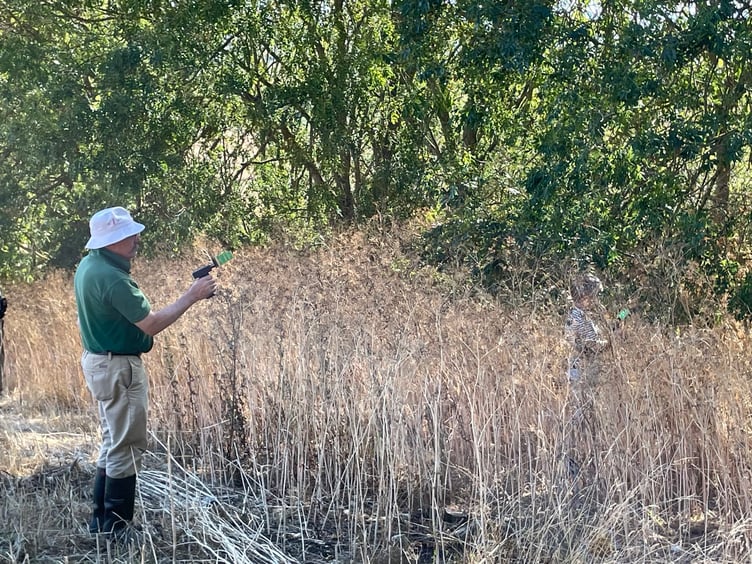
An NBU team arrived to search for the insects’ nest using advanced technology, attaching a tracer to captured hornets.
Because the hornets hunt within an 800-yard radius of their nest, the team was able to track the direction of the insects’ flight and locate and destroy the nest over the bank holiday weekend.
However, Somerset Beekeepers Association has since said the incident happened close to Ashcott, near Street, and not Aisholt.
Asian hornets, also referred to as yellow-legged hornets, are known to be particularly aggressive and their stings are extremely painful and lower the victim’s blood pressure.
They can sting multiple times, making them more dangerous than most stinging insects.
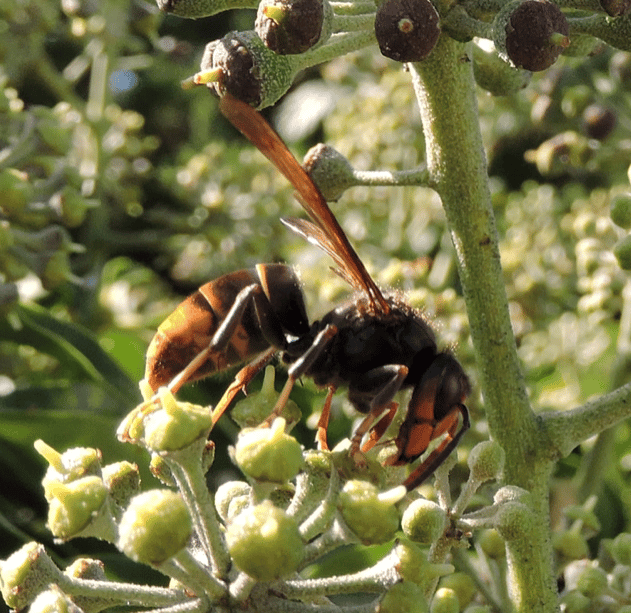
Asian hornets predate on all insect life and larvae can consume nearly 30 lbs of insects, equivalent to 15 bags of sugar, in a season.
They particularly target beehives and have the potential to devastate entire insect colonies at a time when the UK’s bee population has been in decline, partly because farming has become more intensive with an increased use of pesticides such as neonicotinoids.
 Court hearing for man and woman jointly charged with causing serious harm to child
 Faster surgery and better experience promised as Musgrove opens £87 million centre
 Maximum rate for taxi fares increasing for first time in two years
 Early intervention project aims to cut costs by reducing children going into care
Anybody who finds an Asian hornet is required to report it because they are a non-native species posing a threat to UK insects.
They are slightly larger than the common wasp and have a dark thorax and abdomen and bright yellow tips to their legs.
A spokesperson said: “Our local insect population is at greater risk now the Asian hornet has made it to Somerset.”
They can be reported via the Asian Hornet Watch app, or by emailing to [email protected].
What do they look like?
Yellow-legged Asian hornets are rather like large black wasps with a single yellow band, orange face and yellow tipped legs. Queens are up to 30mm long, workers up to 25mm.Look out for:
- black thorax
- abdomen mostly black except for an orange fourth segment
- legs brown with yellow ends
- head black with orange-yellow face
- Queens buzz quite deeply, like a bumblebee
Likely habitat?
Yellow-legged Asian hornets are easiest to see around flowers and bee hives in late summer and early autumn. Nests can be high up in deciduous trees, in hedges and in buildings.
How to detect Asian hornets.
The NBU recommends DIY traps, or alternatively traps are available to purchase from beekeeper equipment suppliers. It's recommended that you observe activity carefully around hives, especially in the autumn. The National Bee Unit has added a new feature to its BeeBase system to help understand UK Asian hornet surveillance.
Download the Asian hornet app which has photos to assist with identification and can be used to report any sightings.
Comments
We've recently changed our login process. If you have an account for commenting, you will need to re-register on the login window.
This article has no comments yet. Be the first to leave a comment.