
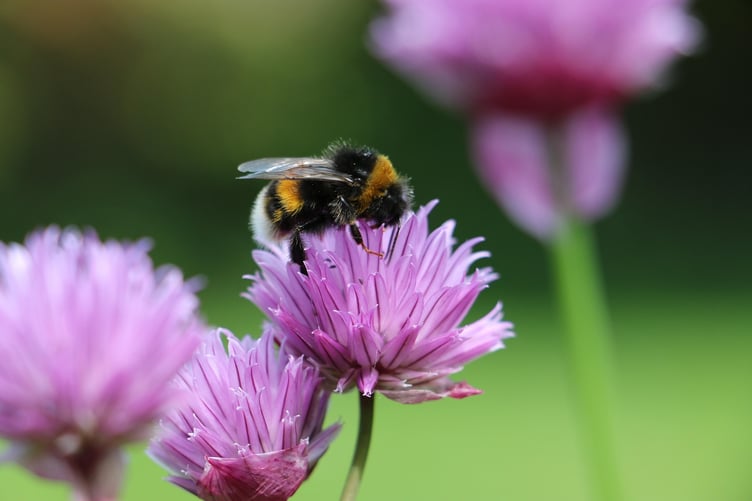
COUNCILLORS had a buzz about them when they gave the thumbs-up to plans for an area of Wellington to be planted up to help support bees.
An area along the newly-named Queen Elizabeth Way has been identified by Wellington Town Council’s open spaces manager, Darren Hill, which could be planted with bulbs over the winter months and make a real difference to bees and other pollinators.
Mr Hill, in a report which went before the town council’s environment committee on September 16, said: “One of the contributing factors to premature hive death is a shortage of sufficient and varied sources of pollen and nectar.
“Bees need reliable sources of food, particularly when they emerge from their hives in early spring, when there can be relatively few flowering plants available.”
Mr Hill added: “Certain flower bulbs begin flowering as early as February – providing an important early source of both nectar and pollen.
“By introducing a bee-friendly bulb mix into this area, we can create an attractive, low-maintenance planting scheme that provides valuable forage for bees at a critical time of year.”
The bulb package – known as Bee Surprise Mix XL – have been specifically selected for their suitability for pollinators with a range of flowers designed to provide food at different points during the season.
Cllr John Thorne was fully in support of the proposals and then there were a number of raised eyebrows among his council colleagues when he made a somewhat surprise admission.
“If I wasn’t a journalist, I would be a bee-keeper,” he said. “We have to fully support this project.”
Mr Hill said the colourful flowers would make a “good visual impression” for the town with Queen Elizabeth Way – the section of Taunton Road from the Chelston roundabout to Priory – a main route in and out of Wellington.




“The Bee Surprise Mix XL has been specifically selected for its suitability for pollinators, with a range of flowering bulbs designed to provide food at different points during the season,” he said.
“This is a relatively simple intervention, but one that could make a meaningful contribution to the local environment by creating an additional source of food for bees, butterflies and other pollinators, while also enhancing the appearance of the area for residents and visitors.”
Mr Hill added: “The benefits of this will not be limited to just bees. Butterflies and other pollinating insects also require a plentiful supply of nectar and nutrients.
“While many butterfly species emerge from their winter resting places later in the spring or during the summer, planting bulbs and other flowering species that bloom through late spring and summer can help provide a continuous source of food throughout the growing season.”
Councillors heard there were a number of advantages to the project – introducing colour and seasonal interest to Queen Elizabeth Way; making productive use of an area of land which would require little maintenance; and contributing to wider efforts to improving biodiversity and supporting declining pollinator populations.
The identified area would be a 25metre-stretch of land by the roundabout with the junction of Lillebonne Way.
Comments
This article has no comments yet. Be the first to leave a comment.