
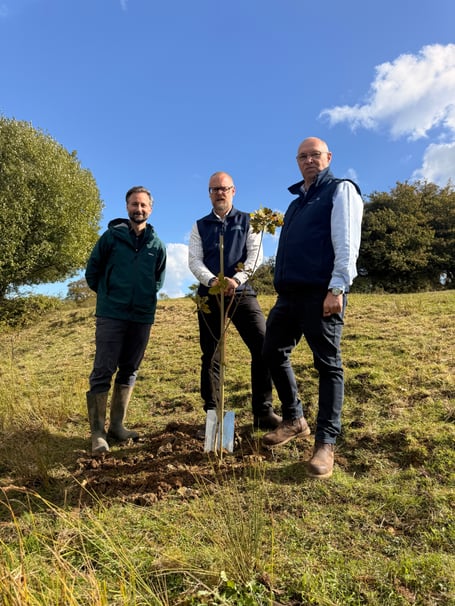
THE developer behind Westpark in Wellington is leading the way becoming the first commercial investor in a 120-acre nature restoration project at Wrangcombe Farm.
Summerfield Developments is the first housing developer to invest in the project near the Wellington Monument having reserved over 40 percent of the available biodiversity credits.
Further local businesses will also be investing in the project, both through the Biodiversity Net Gain (BNG) compliance mechanism and voluntarily as part of their sustainability and social value strategies.
Working with naturethrive, Summerfield will be funding the restoration of grassland habitats to increase the diversity and abundance of native wildflowers at the site.
As well as investing in the nature restoration work, Summerfield plans to offer staff opportunities to volunteer on the site and learn more about the project as it develops.
The wider 120-acre site includes rare mire habitat, steep-sided wooded stream valleys known locally as “goyles”, heathland, ponds and areas rich in orchids.
Group managing director at Summerfield, James Holyday, said: “We are committed to operating in greener ways, from increasing our use of renewable energy to protecting and enhancing biodiversity.
“Delivering Biodiversity Net Gain effectively can be complex, particularly when it comes to securing long-term habitat management, so we are delighted to be working with naturethrive on a local restoration project where we can see the environmental benefits being delivered and maintained.
“It is particularly positive to be able to invest in a scheme close to home which will restore and enhance habitats while supporting our wider environmental responsibilities.”
Director and co-founder of naturethrive, Jonathan Withey, said: “We really appreciate Summerfield’s commitment as our first commercial investor.




“Their support means we can move ahead with preparing and re-seeding the grassland and begin the long-term process of restoring these areas for wildlife.
“We’re looking forward to seeing the biodiversity benefits develop over the coming years.”
Comments
We've recently changed our login process. If you have an account for commenting, you will need to re-register on the login window.
This article has no comments yet. Be the first to leave a comment.