
TOWN councillors are being asked spend up to £10,000 over two financial years on a new project to engage young people in Wellington.
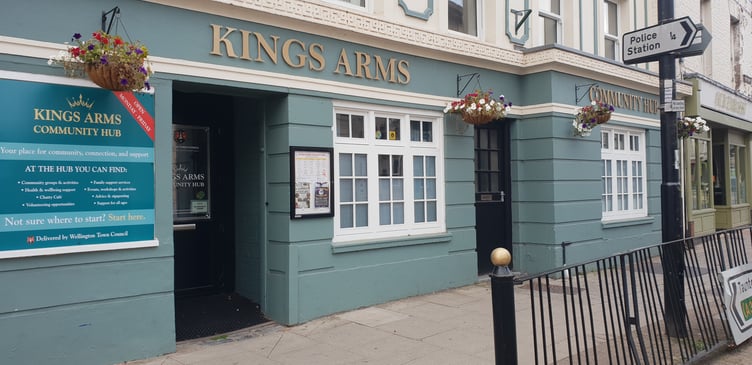
A youth heritage pilot based in the council’s Kings Arms Community Hub will be proposed at a meeting on Monday (September 21) of the authority’s community committee.
It is aimed at developing young people’s practical, employability, and interpersonal skills through participation in a real community project.
Community development officer Laura Batcha said about 10 to 15 youngsters would be involved in the pilot, which would run from January to September.
They would explore Wellington’s heritage and develop practical project experience.
Ms Batcha said the idea came out of development work associated with next year’s first-ever Wellington Day celebration and the council’s involvement in Court Fields School’s Cradle to Career initiative, which seeks to give support from early years through to starting work.
It was initially thought the project could form part of Wellington Day, but the event was already sufficiently developed, so young people would have limited opportunity to genuinely influence its direction.
Ms Batcha said: “A standalone youth heritage pilot was therefore explored as a stronger model, enabling young people to have greater ownership of the project from its early stages rather than participating in an activity where the intended outcome had already been determined.
“Young people would be supported to research and explore Wellington’s heritage, undertake different project roles, and ultimately help determine how their findings should be interpreted and shared with the wider community.
“Engagement would seek to reach beyond young people who routinely participate in council or school activity, with opportunities to explore involvement from Court Fields School, home-educated young people, alternative education provision, and young people engaged through existing youth services.

“Heritage would provide the focus for the pilot, with Wellington’s social history identified as a potential starting point.
“Young people would be supported to undertake research, engage with heritage and community partners, and consider how the stories they uncover could be interpreted for today’s community.
“Importantly, the final output would not be predetermined.
“Depending on the interests and ideas of participating young people, this could potentially include digital interpretation, audio or podcast content, an exhibition, artwork, interpretation, or another creative response developed through the project.
“This approach would ensure young people have meaningful influence over what is ultimately produced.
“Alongside heritage activity, the pilot would provide participants with opportunities to undertake practical project roles.
“These could include research, project planning, communications and marketing, budgeting, digital content, creative development, and community engagement.”
Ms Batcha said appropriate local professional, employer, education provider, heritage organisation, and community partners would be invited to contribute their expertise to help youngsters understand how the skills developed through the project related to different careers and further learning opportunities.
She said: “The approach, therefore, complements the wider aims of Cradle to Career, particularly around employability, experiences of the workplace, and raising awareness of future pathways.
“Alongside practical employability and project-management skills, the pilot would intentionally support the development of wider interpersonal and pro-social skills.”
Comments
This article has no comments yet. Be the first to leave a comment.